
Glossary
Lead in Ballroom Dance
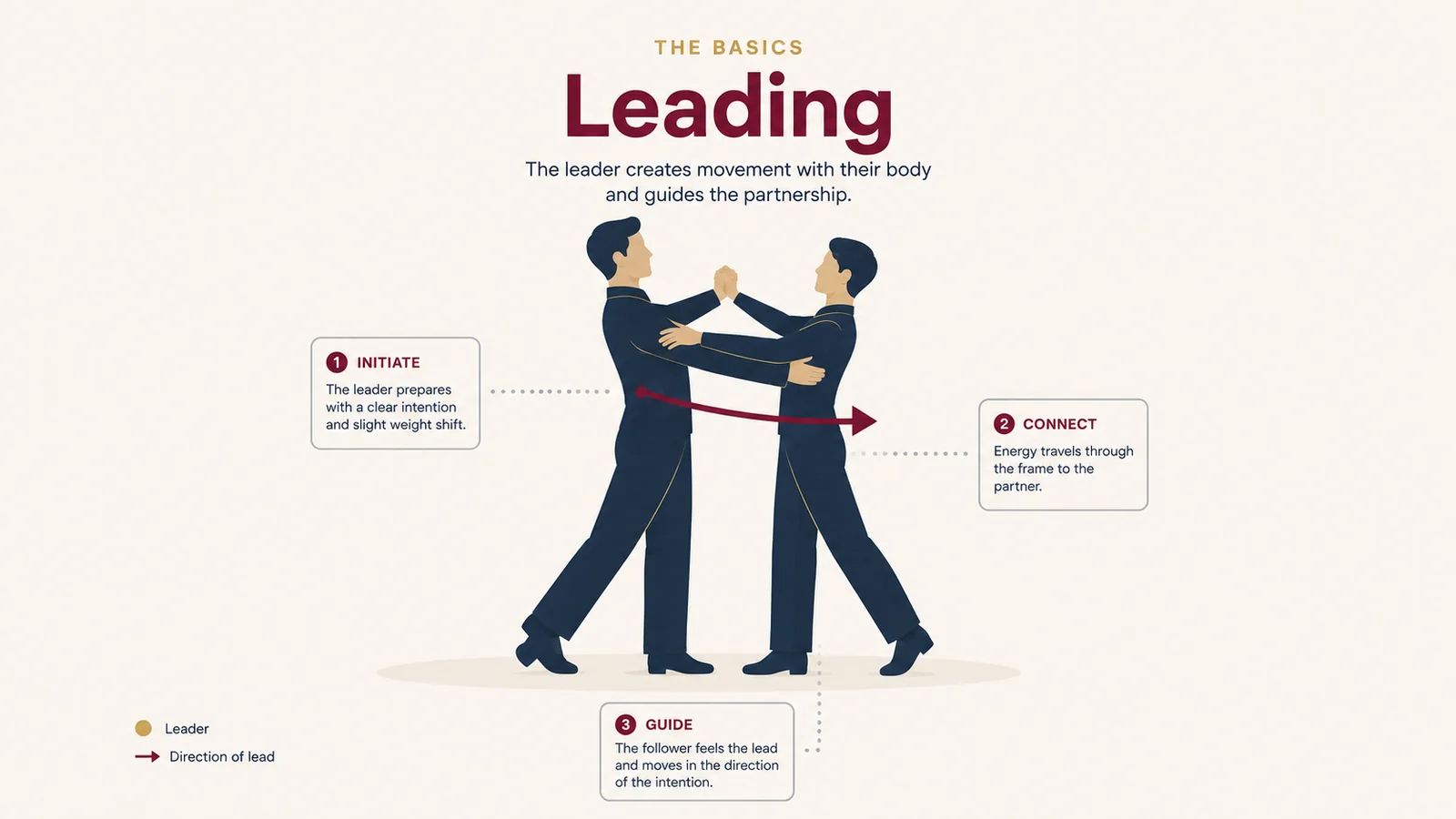
Leading is initiating—giving the follower clear information about direction, timing, and movement through frame and body, not by pushing. Done well, the lead is so quiet that a partner who has never danced the figure can still respond correctly. Here’s what leading means, how it works, and what beginners get wrong most often.
Definition of lead
Lead
- Pronunciation
- leed
- Part of speech
- verb (to lead) and noun (the leader)
- Skill category
- Roles & technique
- Related terms
- follow, leader, follower, frame, connection, posture
In ballroom dance, to lead is to initiate direction, timing, and movement so the partnership stays in sync. As a noun, the lead is the partner doing that work. Lead travels through frame, body position, and clear intention—not through pushing, pulling, or muscling the follower.
Good leading is invitation, not instruction. The follower has the option to respond.
What “lead” means in ballroom dance
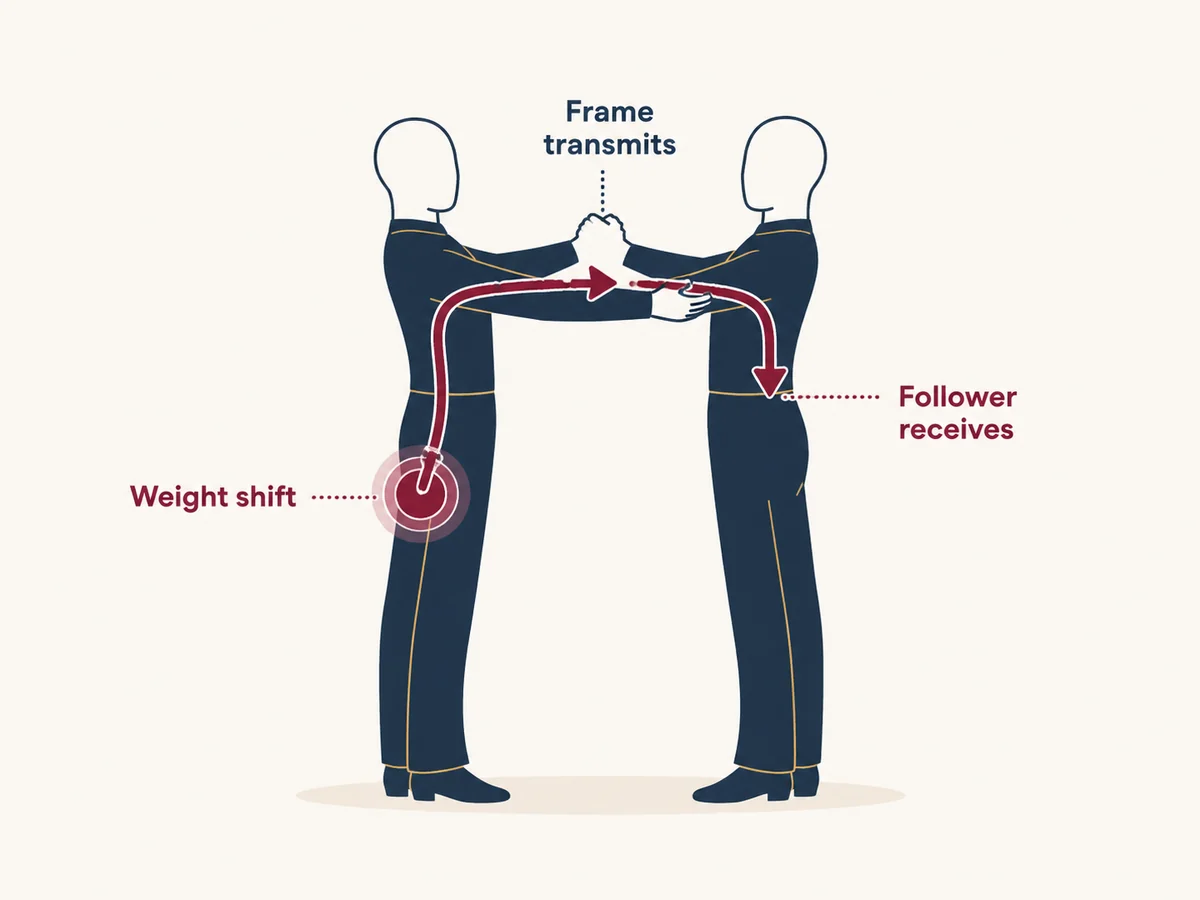
The word “lead” does double duty in ballroom. As a verb, to lead is to initiate—to send clear information through your frame so your partner knows which direction to move, when, and how. As a noun, the lead is the partner who does that work (often also called the leader).
Leading is not directing. The leader doesn’t tell the follower what to do; the leader creates a situation where the most natural response is the right one. A well-led step feels inevitable to the follower—like there’s only one place to go.
Leading also isn’t about gender or strength. Either partner can take the lead role; in many ballroom contexts the role is traditionally assigned, but the mechanics work the same way regardless of who’s leading.
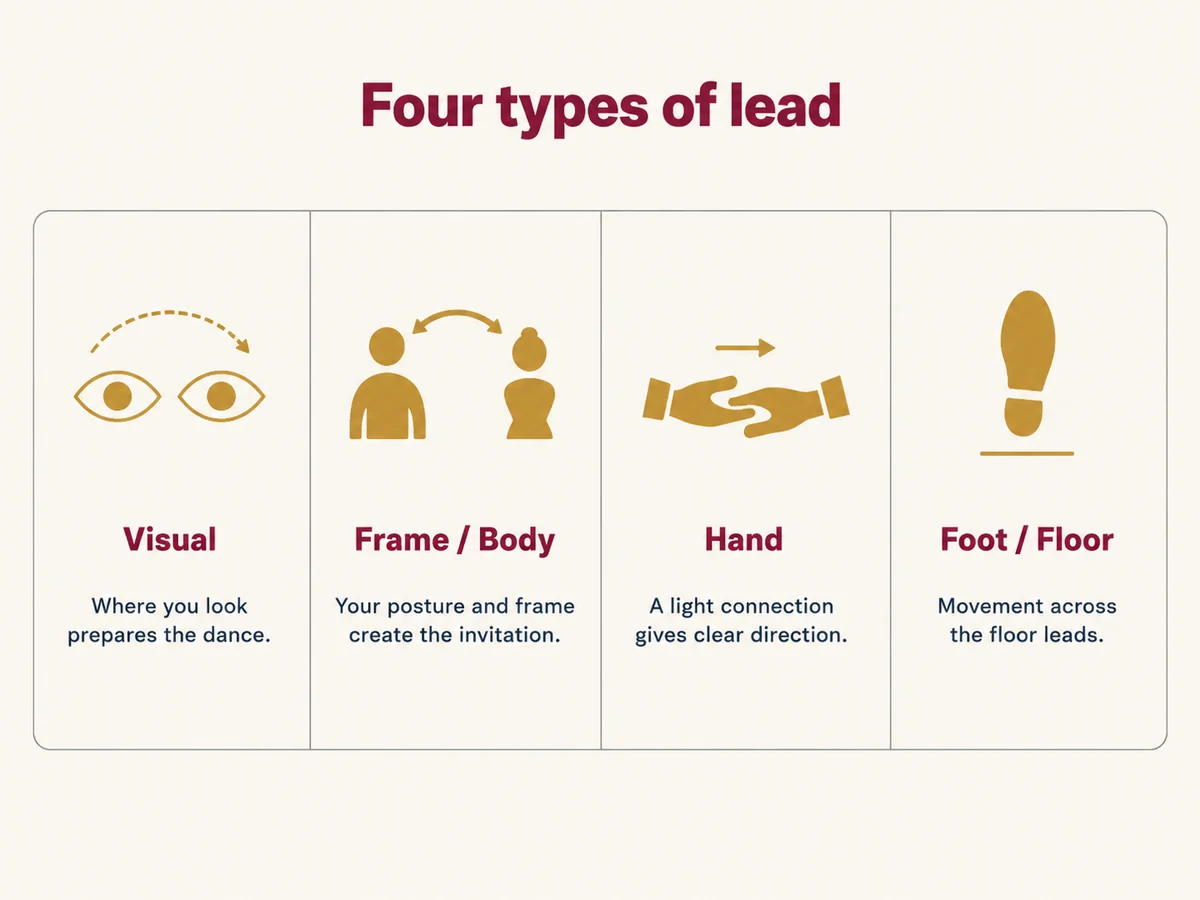
Four types of lead
Different dances and figures use different types of lead. Most movements blend several at once.
| Type | How it works | Where you’ll see it |
|---|---|---|
| Visual | Eye contact, head turn, and clear preparation movements the follower can see | Open Latin figures, Salsa breaks, swing dance openings, solo styling cues |
| Frame / body | The leader’s body shifts weight or rotates; the frame transmits that shift to the follower | Standard and Smooth dances in closed hold (Waltz, Foxtrot, Tango) |
| Hand | Pressure, direction, or tone through the leader’s left hand (or both hands in open hold) | Open Latin, Salsa turns, Swing turns, any single-handed connection |
| Foot / floor | The leader’s timing of when they step communicates timing to the follower through the shared floor connection | All dances—always the foundation underneath the other three |
How leading actually works
Three principles cover most of what beginners need to know.
1. Preparation is the lead
The lead happens before the step, not during. Before the leader moves forward, the leader shifts weight slightly, opens the frame in the direction of travel, and creates a sense of “here we go.” That preparation is the actual lead. By the time the leader actually steps, the follower is already on the way.
2. Lead through frame, not arms
Beginners often try to lead with their hands and arms. This collapses the frame and turns the lead into a push. Real leading travels through the leader’s body—weight transfer, hip rotation, ribcage direction—and the frame transmits that movement to the follower. The arms hold the frame; they don’t generate the lead.
3. Less is more
The best leaders use the smallest amount of physical input needed. A good rule: if the follower can’t feel the lead at all, it’s too small; if the lead noticeably moves the follower’s body, it’s too big. The right amount sits somewhere between “invitation” and “suggestion.”
The 4-part lead checklist
- Stable frame. No collapse, no over-tightening. Frame is the medium through which everything else travels.
- Clear weight transfer. The follower should be able to feel which foot you’re standing on without looking.
- Direction first, then commitment. Indicate where you’re going, then go. Don’t step first and indicate afterward.
- Timing matches the music. Lead on the count the figure starts on, not whenever you’re ready.
Leading by dance style
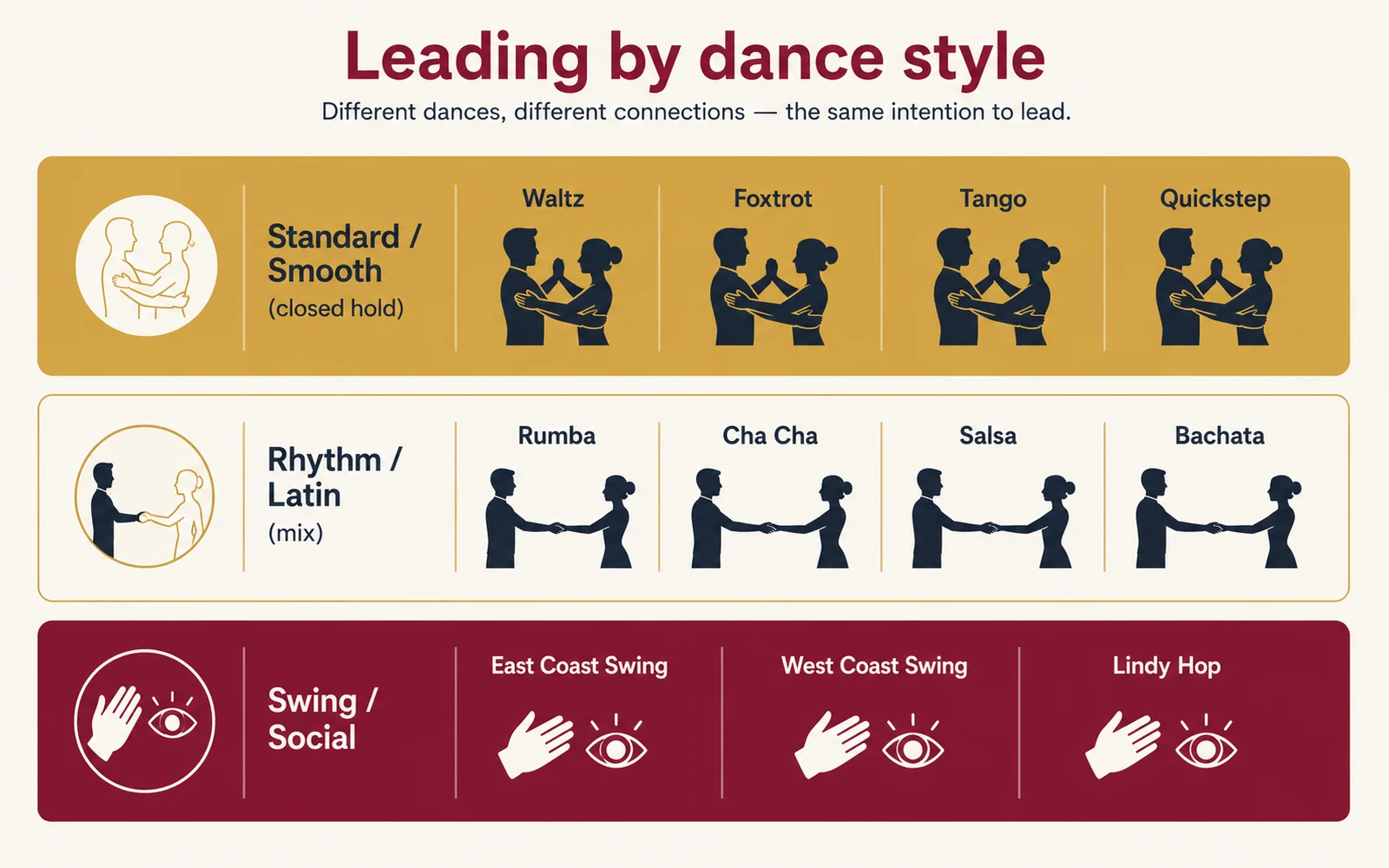
The fundamentals are the same, but the emphasis shifts depending on the dance.
Standard and Smooth (closed hold)
- Waltz: rise and fall + body rotation deliver the lead. The frame is held continuously.
- Foxtrot: weight transfer through the body, smooth horizontal motion, very little hand pressure.
- Tango: sharper, more deliberate body shifts. Frame is firmer, leads are crisper.
- Quickstep: same principles as Foxtrot, but at speed. Leads must be earlier because there’s less time.
Rhythm and Latin (mix of closed and open hold)
- Rumba: slower tempo gives time for body-rotation leads to develop. Hand pressure is light.
- Cha Cha: more hand leading in open figures; body-rotation leads in closed figures.
- Salsa: lots of single-hand leading. Visual leads matter more than in Standard.
- Bachata: blends frame leads with hip-led intention.
Swing and Social
- East Coast Swing: hand pressure, prep moves, and clear timing. Visual leads on openings.
- West Coast Swing: heavy use of slot direction and hand tension; very subtle frame leads.
- Lindy Hop: bouncier, more visual and rhythmic; leads happen with the bounce.
Common leading mistakes
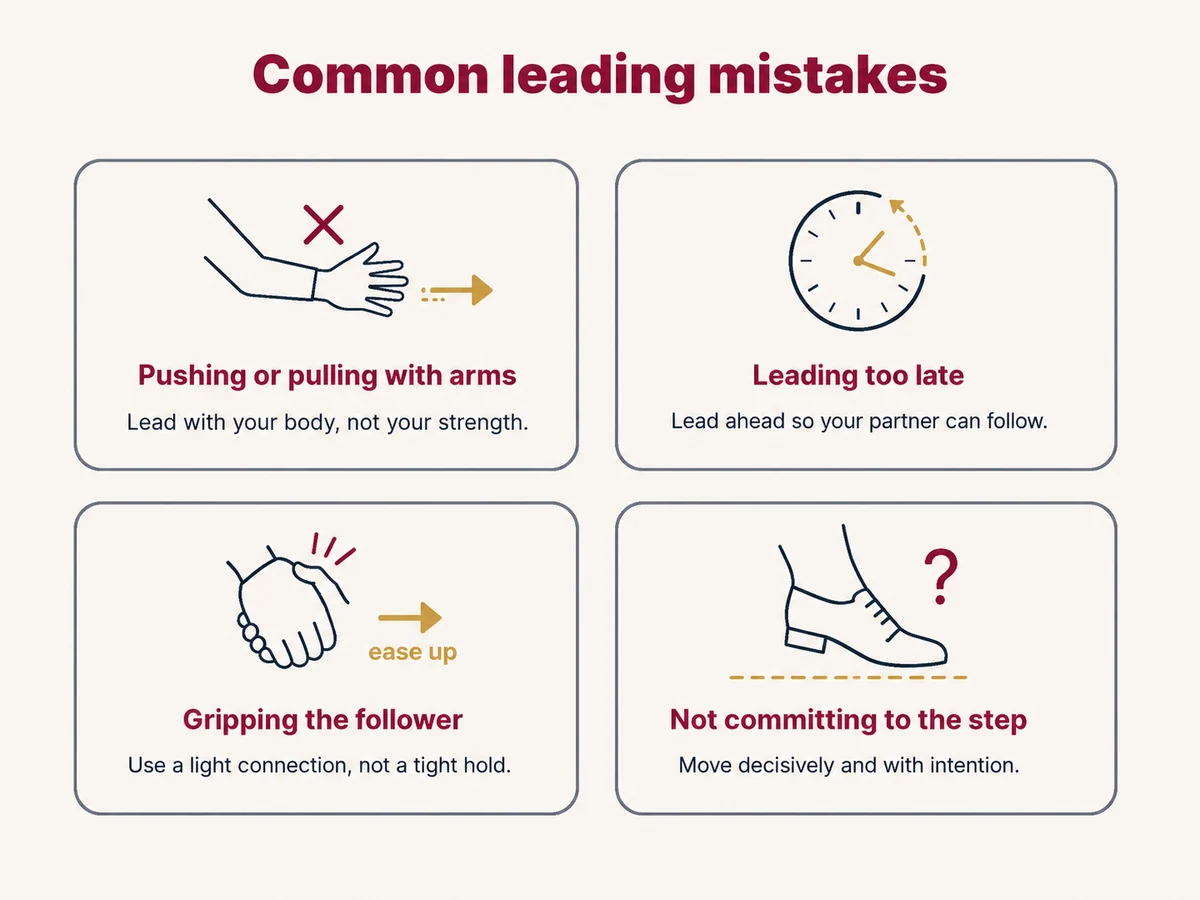
Pushing or pulling with the arms
Fix: Lead through your body. Arms hold the frame; they don’t generate the lead. If your shoulders work hard, you’re muscling.
Leading during the step instead of before it
Fix: Prepare a half-beat early. The follower needs the lead before the count, not on it.
Gripping the follower’s hand or back
Fix: Connection, not grip. The follower should be able to leave the frame at any time. If they can’t, you’re holding too hard.
Not committing to the step you led
Fix: Once you lead a figure, finish it. Half-leading creates confusion for the follower and breaks connection.
Leading every step the same way
Fix: Different figures need different leads. A box step needs a different prep than an underarm turn. Vary the lead to match the figure.
Looking down to check footwork mid-figure
Fix: Eyes up and forward. Looking down tilts the frame and breaks the visual lead.
Forcing follower into figures they don’t know
Fix: If a clear lead doesn’t get a clear response, the figure isn’t happening that round. Lead something simpler and try the harder one again later.
Practice the lead
Three drills that build clean leading without needing a partner present for every minute of work:
- Mirror practice. Stand in front of a mirror and lead figures into the air. Watch your frame. Does it stay stable as you initiate? If your shoulders pop or your hands move first, fix that on your own time.
- Partner without music. With a real partner, walk through one figure repeatedly at half-tempo. Each rep, focus on one element of the lead (prep, weight transfer, timing, finish). Switch focus every 4-5 reps.
- Closed-eyes follower drill. Have your partner close their eyes for a single figure (in a safe practice space). If the lead is clean, they can still follow. If they can’t, the lead needed more body and less visual.
-
Slow practice tempos
Standard / Smooth practice tracks at the slow end of each dance’s range—easier to feel the lead develop.
-
Rumba (body lead drills)
Slow Latin tempo. Perfect for isolating body-rotation leads.
-
Swing (hand lead drills)
East Coast Swing tracks for practicing single-hand and prep leads.
-
BallroomPages Music (Telegram)
Curated practice tracks across multiple dance styles.
The fastest way to improve leading is to dance with multiple followers—every follower will reveal different gaps in your lead. Group classes and social dances are where leads get clean.
FAQ
Lead FAQ
What does “lead” mean in ballroom dance?
Lead is both an action and a role. As a verb, to lead is to initiate direction, timing, and movement through frame and body. As a noun, the lead is the partner doing that work.
Is leading just pushing the follower?
No. Pushing collapses the frame and turns the lead into force. Real leading is invitation—a clear preparation that the follower can respond to. If you’re muscling, you’re not leading.
What are the types of lead?
Four main types: visual (eye contact, prep moves), frame/body (the leader’s weight shifts transmit through the frame), hand (pressure or direction through the hand connection), and foot/floor (timing through the shared floor). Most movements blend several.
Can the follower lead?
In traditional ballroom roles, one partner leads and one follows for a given dance. But the techniques are the same regardless of which partner takes which role—and switching is common in practice, classes, and modern social dancing.
How early should the lead start?
The prep usually starts about a half-beat before the step. The follower needs time to feel the lead before the count they’re supposed to step on.
Is leading harder than following?
Different, not harder. Leading requires knowing the figures and the timing; following requires reading the lead and committing to the response without anticipation. Both are full skills.
What’s the difference between leading and “backleading”?
Backleading is when the follower initiates a figure they think is coming, instead of waiting for the lead. It looks similar from outside but breaks the partnership—the leader can’t change plans, and the dance becomes choreographed.
How do I get better at leading?
Dance with many different followers, drill prep work in front of a mirror, and ask for honest feedback. The fastest improvements come from feedback you’d rather not hear.
Editorial
Sources and review notes
This glossary entry should be reviewed by a qualified ballroom instructor before launch. Leading principles follow widely accepted conventions from NDCA, WDSF, ISTD, and Arthur Murray syllabus materials, plus Dance Vision and other standard references. Specifics on lead mechanics vary slightly by syllabus body and teacher—follow your instructor’s convention within a single learning context.
This is dance terminology, not medical advice. Ballroom Pages follows an editorial policy of education-first guidance. Questions? Contact us. Updated May 27, 2026.