
Glossary
Sway in Ballroom Dance
Watch a great Waltz couple travel through a turn and their bodies tilt together like a sailboat carving a curve—that’s sway. It is the controlled inclination of the body that gives the Standard dances their shape and softness, and it is one of the most misunderstood words in ballroom, because it is not leaning. Here is what sway really is, where it comes from, which dances use it, and how to grow it without tipping over.
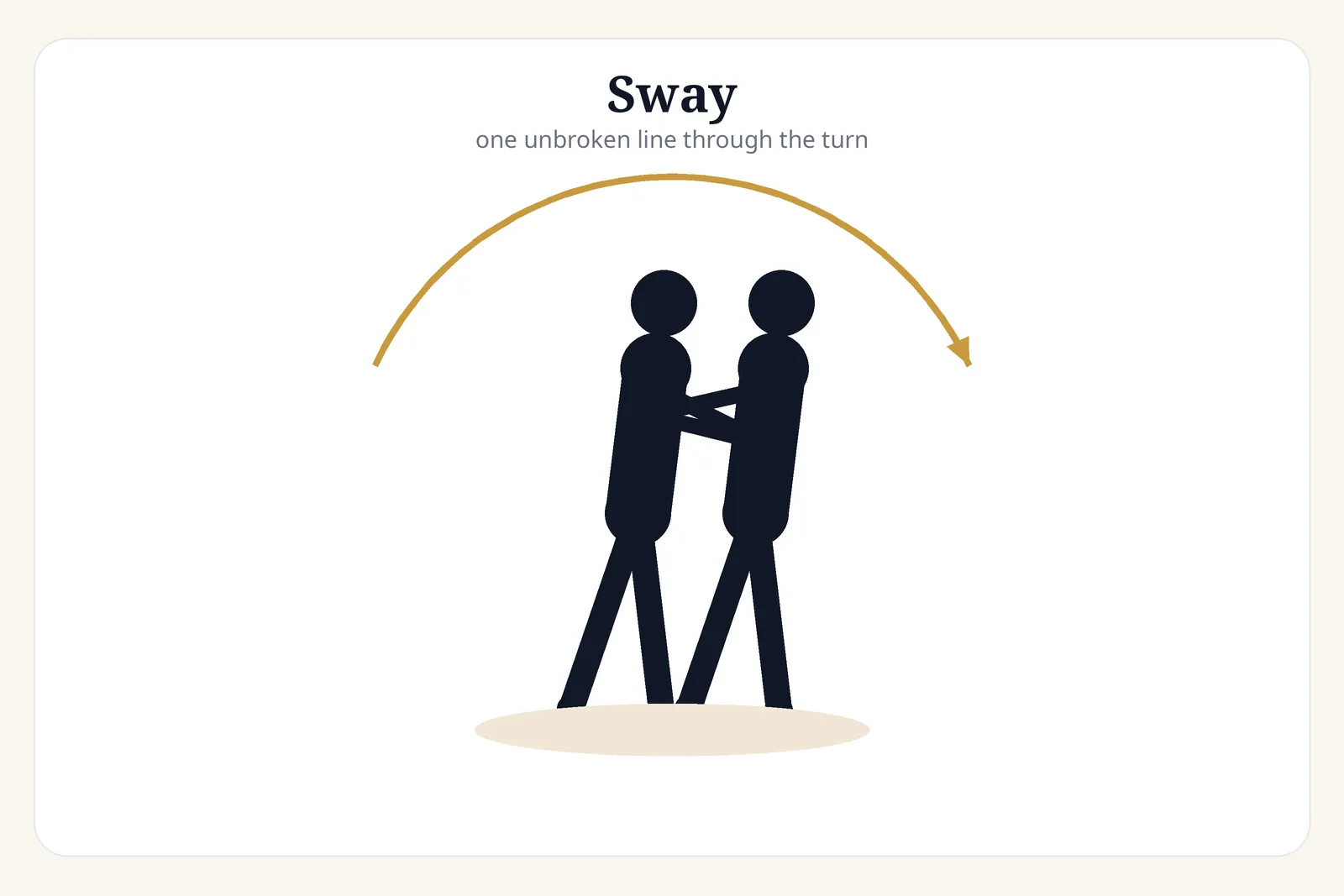
Definition of sway
Sway
- Skill category
- Technique & movement (Standard)
- Advanced variant
- Broken sway (upper body only)
- Companion term
- Posture (what sway must not break)
- Related terms
- rise and fall, CBM, frame, topline, alignment
Sway is the controlled inclination of the body—usually away from the moving foot and toward the inside of a turn—used for shape, balance, and softness in the Standard dances. Real sway starts from the feet and legs with an intact topline; it is not a lean from the waist.
A sailboat heels into its turn without folding in half. So does a dancer.
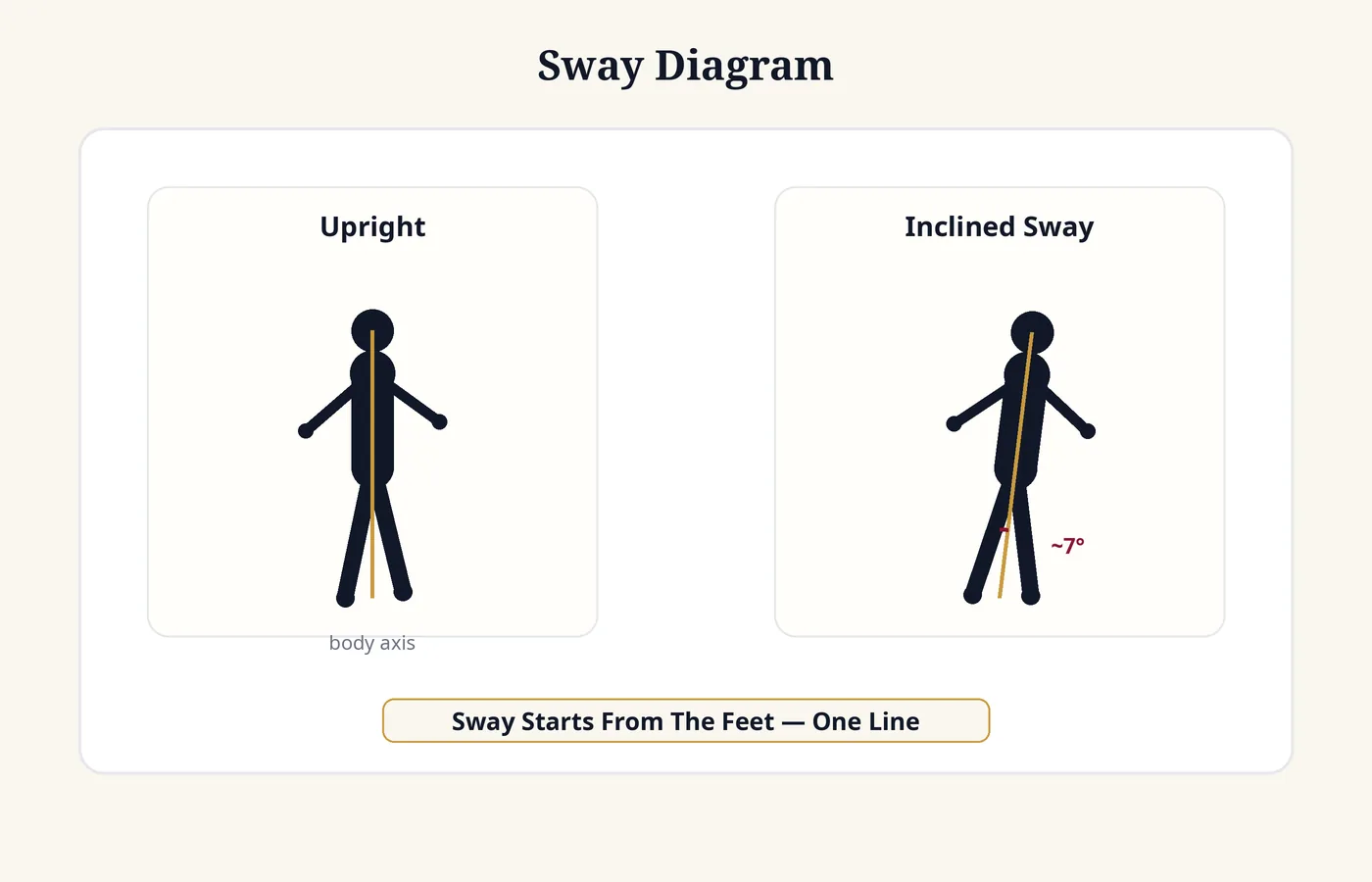
What sway means in ballroom
When a couple travels through a turning figure, physics wants to throw them outward—the same force you feel in a car taking a bend. Sway is the technique that answers it: the body inclines as one connected piece toward the inside of the turn, balancing the couple, absorbing the momentum, and—as a glorious side effect—creating the tilted, wind-blown shapes that make Waltz photographs look like paintings.
The classic teaching cue is that sway goes away from the moving foot: step sideways onto your left foot and the body inclines right, and vice versa. In turning figures that works out to inclining toward the center of the turn, like a cyclist through a corner. Sway shows up mainly in the swinging Standard dances—Waltz, Foxtrot, Quickstep, Viennese Waltz—woven together with rise and fall and CBM into what dancers call “swing.”
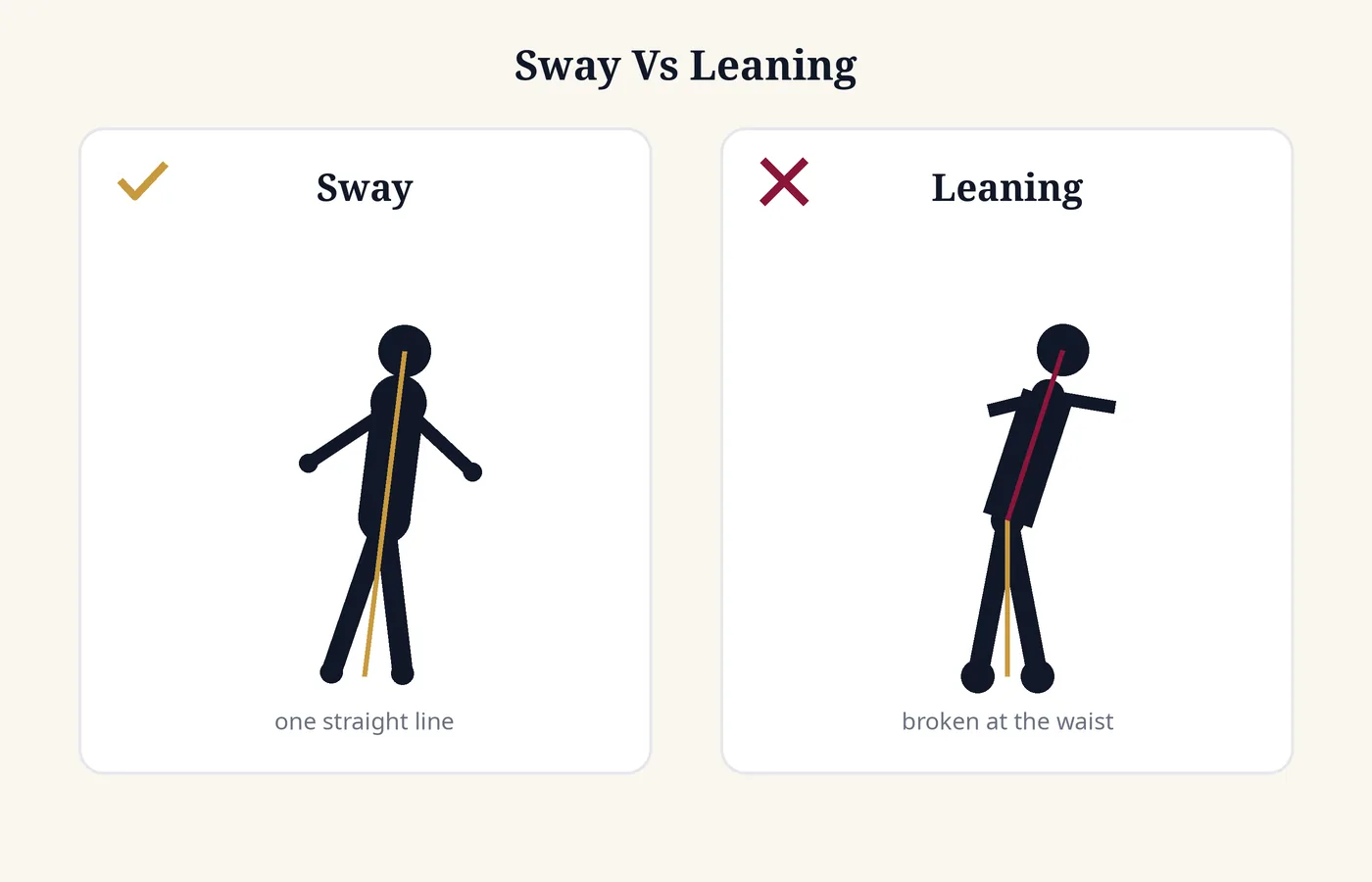
Sway vs leaning: the crucial difference
This is the distinction that separates shape from collapse:
| Sway (correct) | Leaning (the mistake) |
|---|---|
| Starts from the feet, ankles, and legs | Starts by bending at the waist |
| Body inclines as one connected line | Body breaks into two angles |
| Frame and topline stay intact | Frame distorts; the partner feels dragged |
| Improves balance through the turn | Destroys balance and pulls the couple over |
How sway actually works
Three jobs, one mechanism:
What sway does
- Balance. Inclining into the turn counteracts the outward pull of traveling rotation—the couple stays over their feet instead of being flung off them.
- Control. Sway softens the top of the rise and helps brake big traveling figures smoothly instead of jolting to a stop.
- Shape. The visual tilt stretches one side of the body and creates the elegant lines judges and audiences read instantly.
And one mechanism: the incline begins at the floor. Ankles and legs tip the whole standing structure a few degrees while posture and the connected frame carry the tilt to the top of the head as a single unbroken line. A few degrees is plenty—photographs exaggerate what the body actually does.
Sway by dance style
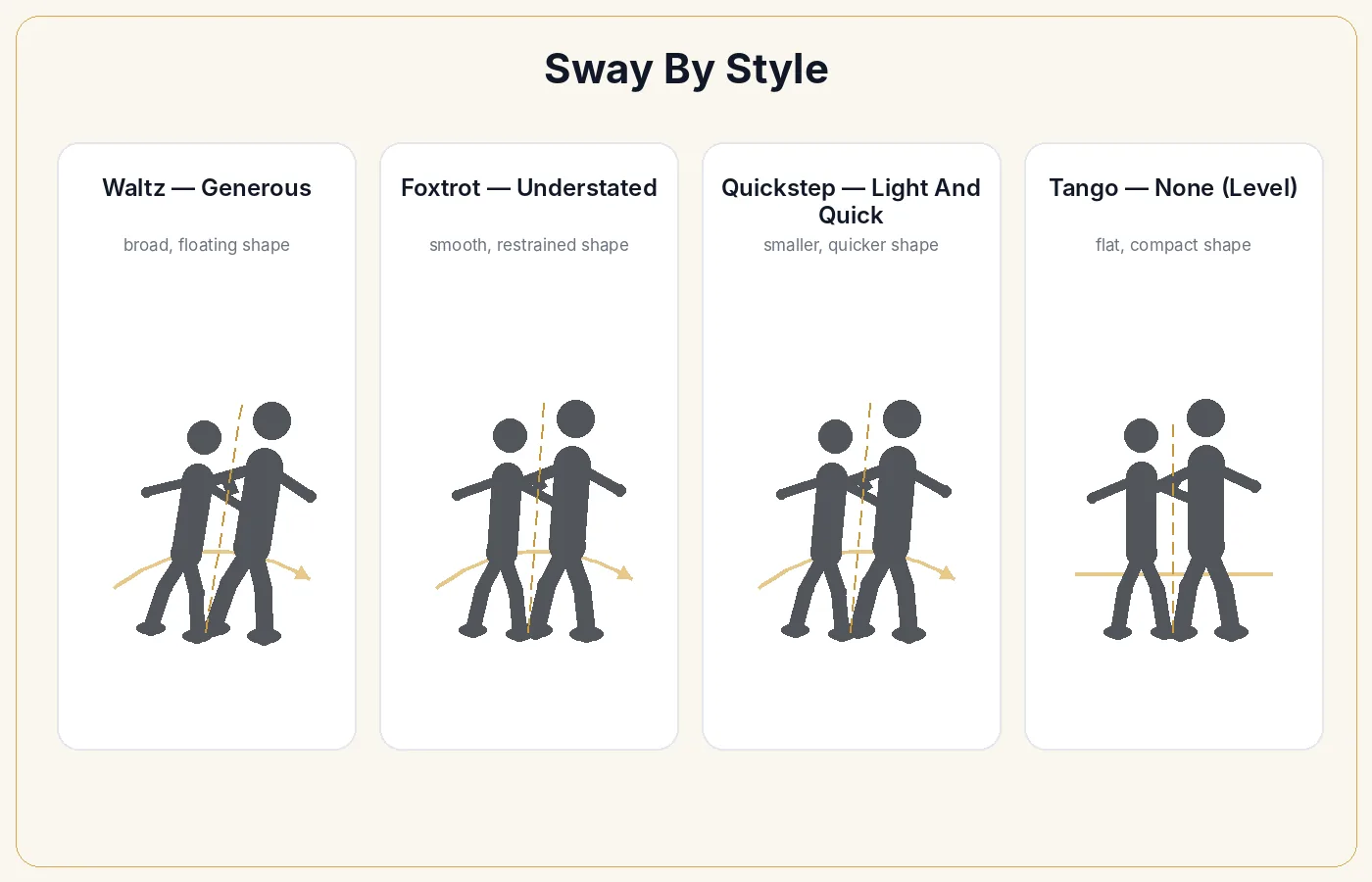
| Dance | Sway character |
|---|---|
| Waltz | Generous and visible—the home of sway |
| Foxtrot | Smooth, continuous, understated |
| Quickstep | Light and quick—there and gone |
| Viennese Waltz | Subtle—continuous rotation leaves little room |
| Tango | Essentially none—flat, level, staccato by design |
Broken sway (the advanced cousin)
Once dancers control standard sway, choreography adds broken sway: an inclination created deliberately in the upper body—the ribcage and above—while the legs stay vertical, “breaking” the single line on purpose for dramatic effect. You see it in showdance picture lines and advanced competitive choreography. It is an intentional stylistic exception that only works because the dancer could hold normal sway first; for beginners, the unbroken line is the skill to build.
Common sway mistakes
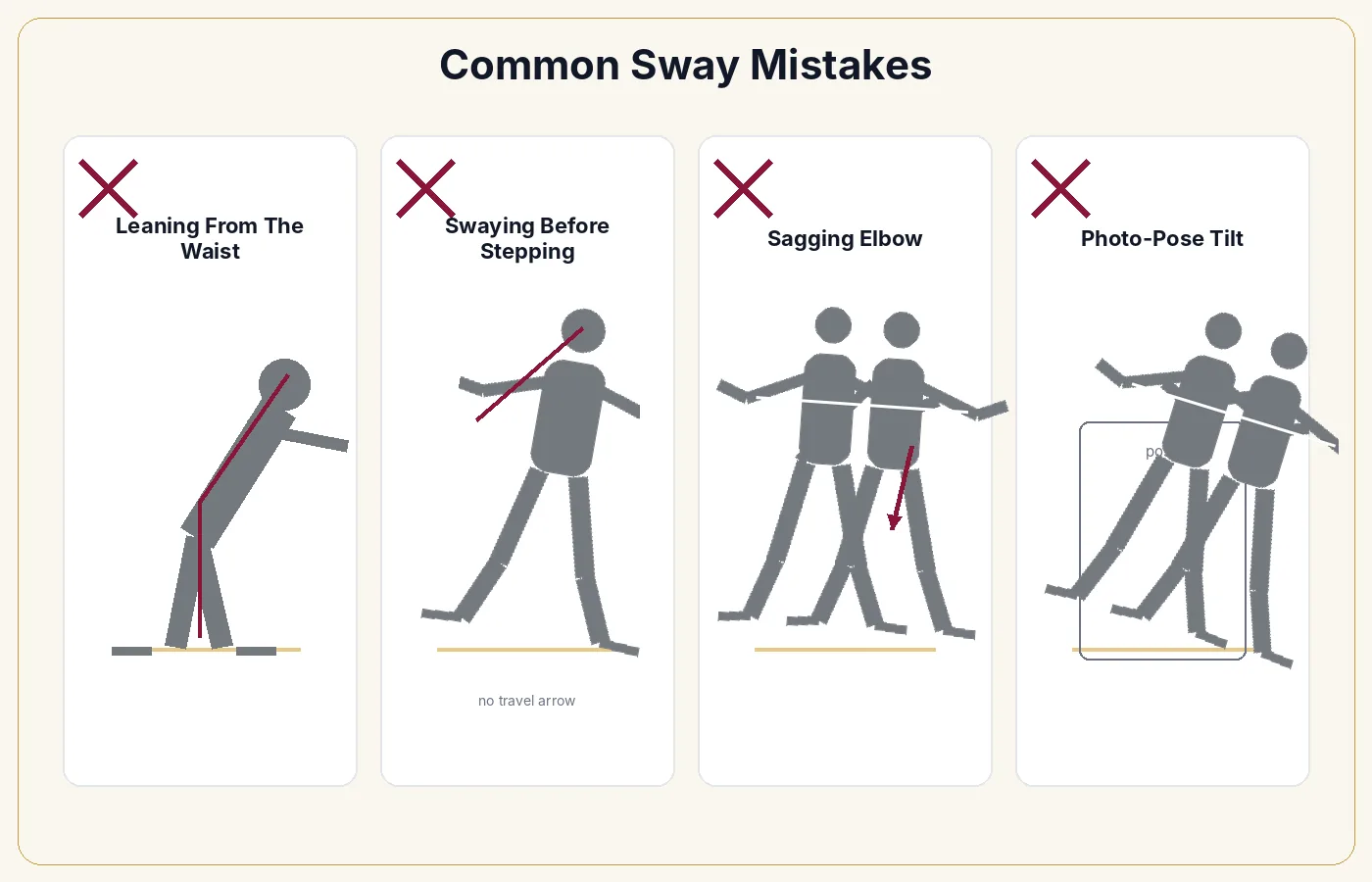
Leaning from the waist
Fix: Start the incline at the ankles and let the whole line tip a few degrees. If your belt buckle and shoulders point different ways, it’s a lean, not sway.
Swaying too early
Fix: Sway develops through the figure, usually blooming on the second step—not before you’ve moved. Step first, shape second.
Dropping the frame on the low side
Fix: The frame tilts with the body as one piece. If one elbow sags, the sway has broken the topline.
Chasing the photo
Fix: Competition photos show extreme moments of stretch. Functional sway is a few degrees—build balance first, amplitude later.
Practice sway safely
Sway is balance training in disguise—drill it slowly:
- Wall tilt. Stand tall, whole body as one line, and tip a few degrees side to side from the ankles—no waist bend. A mirror keeps you honest.
- Side-step sway. Step side onto the left foot and let the body incline gently right (away from the moving foot); repeat the other way.
- Turn and shape. Dance a slow natural turn and add a whisper of sway through steps 2–3—less than feels impressive.
-
Waltz (the home of sway)
Slow 3/4 swing—room to shape every turn.
-
Frame & posture guide
The intact topline sway depends on—build it first.
-
Rise & fall guide
Sway’s partner skill—the vertical breath it softens.
-
BallroomPages Music (Telegram)
Mixed-style practice tracks. Shape drills coming soon.
FAQ
Sway FAQ
What is sway in ballroom dancing?
Sway is the controlled inclination of the body—usually away from the moving foot and toward the inside of a turn—used for balance, control, and shape in the Standard dances. The body tips as one connected line from the feet, with the posture and frame intact.
What is the difference between sway and leaning?
Sway starts from the feet and legs and inclines the whole body as a single line; leaning bends at the waist and breaks the body into two angles. Sway improves balance and keeps the frame intact; leaning destroys both.
Which dances use sway?
The swinging Standard dances: Waltz (most generously), Foxtrot, Quickstep, and—subtly—Viennese Waltz. Tango deliberately has essentially none: it is danced flat, level, and staccato.
What is broken sway?
An advanced styling where the inclination is created deliberately in the upper body while the legs stay vertical, “breaking” the single line on purpose for dramatic effect—seen in advanced choreography and picture lines. Beginners should master the unbroken line first.
Do beginners need to learn sway?
Not on day one—footwork, posture, and timing come first. But a whisper of sway enters early Waltz figures naturally, and learning it correctly (from the feet, a few degrees) from the start prevents the lean habit that is much harder to unlearn later.
Editorial
Sources and review notes
This glossary entry should be reviewed by a qualified ballroom instructor before launch. Sway is a technique-heavy topic—descriptions follow widely used syllabus conventions, but the mechanics (and especially broken sway) deserve expert verification before being treated as teaching material.
This is beginner orientation, not a substitute for instruction. Ballroom Pages follows an editorial policy of education-first guidance. Questions? Contact us. Updated July 9, 2026.