Resources · Online Lessons

Online Ballroom Dance Lessons: How to Choose the Right Way to Learn at Home

Online ballroom dance lessons can be a wonderful way to start: private, flexible, repeatable, and much less intimidating than walking into a studio for the first time.

But not every online lesson format fits every dancer. A free tutorial, a structured course library, a live virtual lesson, a wedding choreography program, and a hybrid studio plan all solve different problems. Use this guide to compare the options, avoid wasting money, set up a realistic practice space, and choose a path that helps you practice—not just watch.

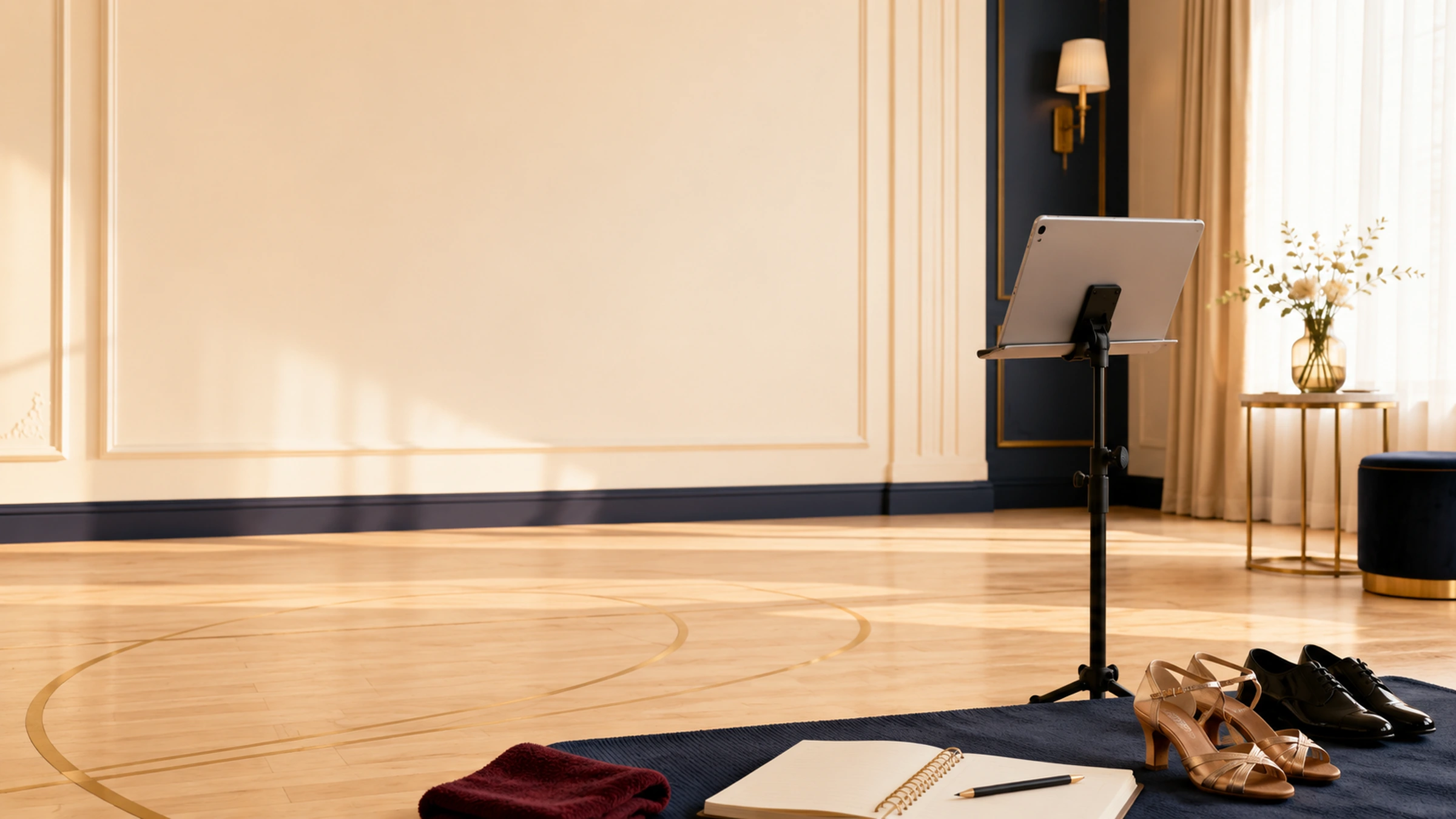
Beginner-friendly home setup for online ballroom dance lessons with a laptop, open floor space, dance shoes, and notebook.
A laptop, a little open floor, secure shoes, and a notebook are enough to start.

Written by Ballroom Pages Editors Updated May 22, 2026 18–22 min read

Editorial status: Instructor review recommended before publication. A reviewer name, credentials, and review date will be added once verified. Ballroom Pages follows an education-first editorial policy.

Key takeaways

What matters most before you pay

The best online ballroom dance lessons are not always the most expensive. The best fit depends on your goal, timeline, partner situation, need for feedback, and ability to practice.

Free videos are useful for exploring, but beginners usually need a sequence: what to learn first, what to repeat, and when to move on.

Structured course libraries are good for steady self-paced learning; live virtual lessons are better when you need corrections.

Wedding couples should choose simple, repeatable material before choosing dramatic choreography.

Online lessons teach steps, timing, vocabulary, and practice habits well. They struggle more with frame, connection, posture correction, balance, and advanced partner technique.

Playlists matter. If you only follow lesson videos, you may memorize the teacher’s timing without learning to hear the music yourself.

Before paying, check current pricing, cancellation terms, refund policy, included feedback, style coverage, and whether the program works with or without a partner.

Quick answer

What is the best way to learn ballroom dance online?

A good online path looks like this:

  1. Start with one goal: social dancing, wedding dance, technique, or exploring styles.
  2. Choose one format: free videos, course library, private virtual lesson, wedding program, or hybrid plan.
  3. Learn one dance first: Waltz, Rumba, Foxtrot, Cha Cha, East Coast Swing, or Salsa are common beginner starting points.
  4. Practice in short sessions: 10–20 minutes is better than one long session you never repeat.
  5. Use music between lessons so you learn timing, not just choreography.
  6. Add live or in-person feedback when your frame, partner connection, balance, or confidence stops improving.

Online lessons can get you started. Feedback helps you refine.

Decision guide

Which online lesson format fits you?

Choose by the problem you are trying to solve.

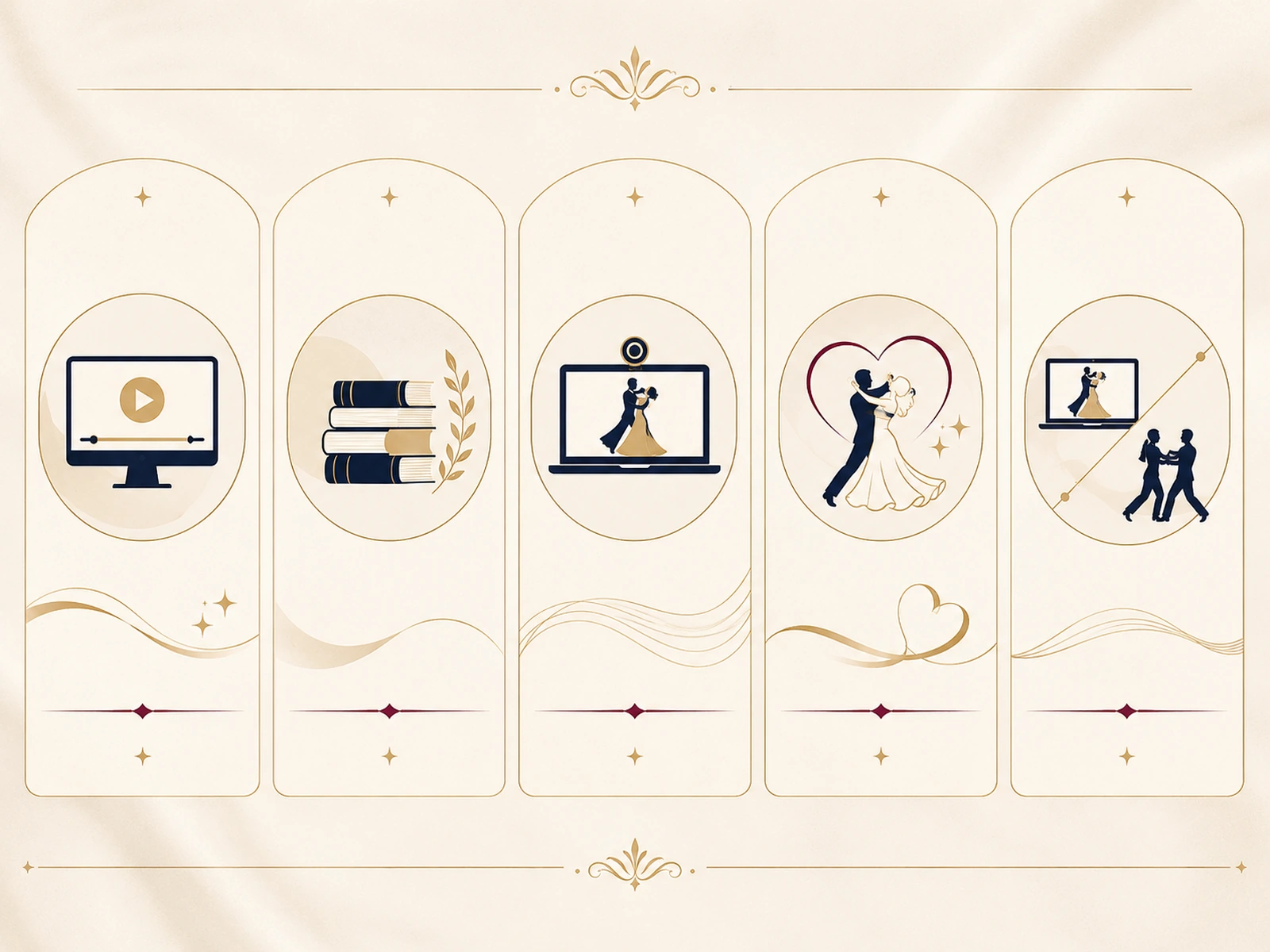
Comparison graphic showing free videos, course library, live virtual lessons, wedding lessons, and hybrid coaching paths.

“I want to try ballroom without spending money yet.”

Start with free videos, then add structure quickly. Free lessons are perfect for testing whether you enjoy ballroom, learning a few basic steps, and seeing which teaching style feels clear. The risk is that you may jump between random videos without building a foundation.

Best next step: choose one dance and follow one beginner sequence for a week.

“I want a clear path and I can practice on my own.”

Choose a structured course library. This format works well if you like replaying lessons, following a syllabus, and learning at your own pace. Look for beginner programs, style categories, practice assignments, and clear progression.

Best next step: choose a course that tells you what to practice after each lesson.

“I need someone to correct me.”

Choose live virtual private lessons or a hybrid plan. A live instructor can watch your timing, posture, setup, and movement choices. It is still not identical to in-person coaching, but it is much more personalized than prerecorded video.

Best next step: book one live lesson after you have practiced a basic step, so you have something specific to review.

“We are preparing for a wedding.”

Choose an online wedding dance program or virtual private wedding lessons. Wedding couples need a plan that fits the song, timeline, dress/shoes, floor space, and stress level. Keep the choreography simple enough to repeat under pressure.

Best next step: use the Song-to-Dance Style Matcher, then choose a beginner-friendly pattern.

“I already take in-person lessons and want to improve faster.”

Choose a hybrid online + studio approach. Use online lessons for review, vocabulary, timing drills, and solo practice. Use in-person lessons for frame, connection, turns, posture, partner technique, and corrections.

Best next step: ask your instructor what to review online between lessons.

“I care about technique or competitions.”

Choose technique-focused membership content plus expert feedback. Technique content can help you understand concepts, but advanced ballroom technique usually needs qualified review. Use online lessons to study ideas, then get a coach to check what your body is actually doing.

Best next step: record short clips and bring questions to a coach.

Compare formats

Online ballroom lesson comparison matrix

How seven online lesson formats compare on best use, teaching strengths, feedback, partner need, cost pattern, and watch-outs
Format Best for Teaches well Feedback level Partner needed? Cost pattern Watch-outs
Free YouTube lessonsTesting interest, learning a basic stepSimple steps, quick demos, inspirationUsually noneOften no, depending on lessonFreeCan be scattered; quality varies; no correction
Structured course libraryBeginners who want a sequenceStyles, footwork, timing, routines, reviewUsually none or limitedSome solo, some partnerMonthly, annual, or app subscriptionCheck progression, style coverage, and cancellation
Live virtual private lessonLearners who need correctionPersonalized fixes, timing, posture, lesson planningHigh for onlineNot always, but helpfulHourly or packageCamera angle and internet quality matter
Online group classSocial learners, accountabilityGroup patterns, timing, communityLow to moderateVariesDrop-in, package, membershipLess personalized; class pace may not fit
Online wedding dance programCouples with a date and songSimple choreography, first-dance structureVaries from none to custom feedbackUsually yesOne-time, subscription, or packageAvoid overly dramatic choreography too close to wedding
Hybrid online + local studioLearners wanting convenience and correctionReview online, refine in personHigh when combinedHelpfulMixedRequires coordination and a clear practice plan
Technique membershipReturning students, competition-curious dancersConcepts, drills, styling, deeper studyVariesOften yes for partner techniqueMembership or courseDo not treat advanced video as a substitute for expert correction

Research snapshot

Provider examples we reviewed

These are research examples, not rankings or endorsements. Prices and policies change, so check the provider’s current page before buying. Pricing snapshot accessed May 22, 2026.

Provider examples used to show the range of current online lesson formats — not rankings, endorsements, or paid placements
Provider example Type Verified details Pricing/policy notes
Dance Vision SyllabusStructured course library/appDance Vision states its Premium plan includes a large class library and syllabus coverage across Smooth, Rhythm, International Ballroom, International Latin, Argentine Tango, Swing, Social, Country Western, and Dance Fitness.Recheck current pricing before publishing or linking.
Ballroom MasteryMembership with on-demand lessons + live coachingMembership page describes step-by-step lessons, live coaching events, replays, and development plans.Recheck current weekly/monthly/yearly pricing and refund language before publishing.
Duet Dance Studio virtual lessonsCouples/wedding/social online programsDuet offers virtual lessons for couples learning for fun, weddings, and special occasions.Recheck membership/private lesson pricing before publishing.
Anastassia Ballroom virtual lessonsPre-recorded virtual ballroom/wedding packagesPage describes prerecorded video lessons and recorded practice video reviews for some packages.Recheck package prices before publishing.
Ballroom FeedOnline lessons for couples at homePresents beginner-focused couple lessons for social and wedding dancing.Recheck pricing and cancel-anytime language before publishing.
Passion4DancingVideo lesson membership + free video presenceOfficial channel/site presence suggests a large video lesson library.Do not publish current pricing unless manually verified from the official source.
Ballroom Dance Chicago tutorialsFree tutorial libraryOffers free tutorials and points users to its YouTube channel.Free tutorial example; paid offerings should be checked separately.
Dance With Me live streamingStudio live/replay modelLive online schedules can change; use as an example only after current verification.Do not generalize one studio’s live-stream status to all providers.

These provider examples are a research snapshot to illustrate the range of formats — not endorsements, rankings, or paid placements. This guide contains no affiliate links at launch. Verify each provider’s current pricing, policies, and platform details directly before relying on them.

Strengths & limits

What online lessons can and can’t teach

Online lessons are strongest when the skill can be seen, paused, repeated, and practiced in small pieces. They are weaker when the teacher needs to feel what is happening or correct something subtle in real time.

Teaches well Strong

  • Basic foot positions
  • Dance vocabulary
  • Counts and timing patterns
  • Simple steps and combinations
  • Beginner wedding dance structures
  • Solo practice drills
  • Routine memory
  • What a finished pattern should look like
  • How to review between in-person lessons
  • Confidence through repetition

Struggles to teach Needs feedback

  • Frame pressure
  • Partner connection
  • Lead and follow response
  • Posture correction
  • Balance and weight transfer
  • Rise and fall
  • Cuban motion
  • Rotation and travel
  • Floorcraft
  • Musical interpretation
  • Dips, tricks, lifts, or risky choreography
  • Competition-level refinement

Online lessons can also help shy beginners because there is no studio pressure. You can pause, rewind, make mistakes, and try again without anyone watching. This does not mean online lessons are bad. It means they are better for starting, reviewing, and practicing than for solving every technical problem. For the skills above, see Frame and Posture and Lead and Follow.

Safety note: If you have pain, dizziness, balance issues, a recent injury, or a medical condition, do not rely on a video to diagnose what is safe for you. Speak with a qualified medical professional and, when appropriate, a qualified instructor.

Know the limits

When to choose in-person lessons instead

Comparison visual showing online lessons for practice and in-person feedback for correction.

Choose in-person or live expert feedback when:

  • You keep losing balance.
  • Your partner feels pushed, pulled, or uncomfortable.
  • Your frame feels tense or collapsed.
  • You cannot tell whether your timing is right.
  • You want to learn dips, lifts, fast turns, or dramatic wedding moves.
  • You are preparing for competition.
  • You feel pain during or after practice.
  • You are stuck repeating the same mistake.
  • You want someone to choose material for your body, partner, song, and timeline.

A smart path is not online or in-person. For many dancers, the best path is online plus feedback.

Practice space

Set up your home practice space

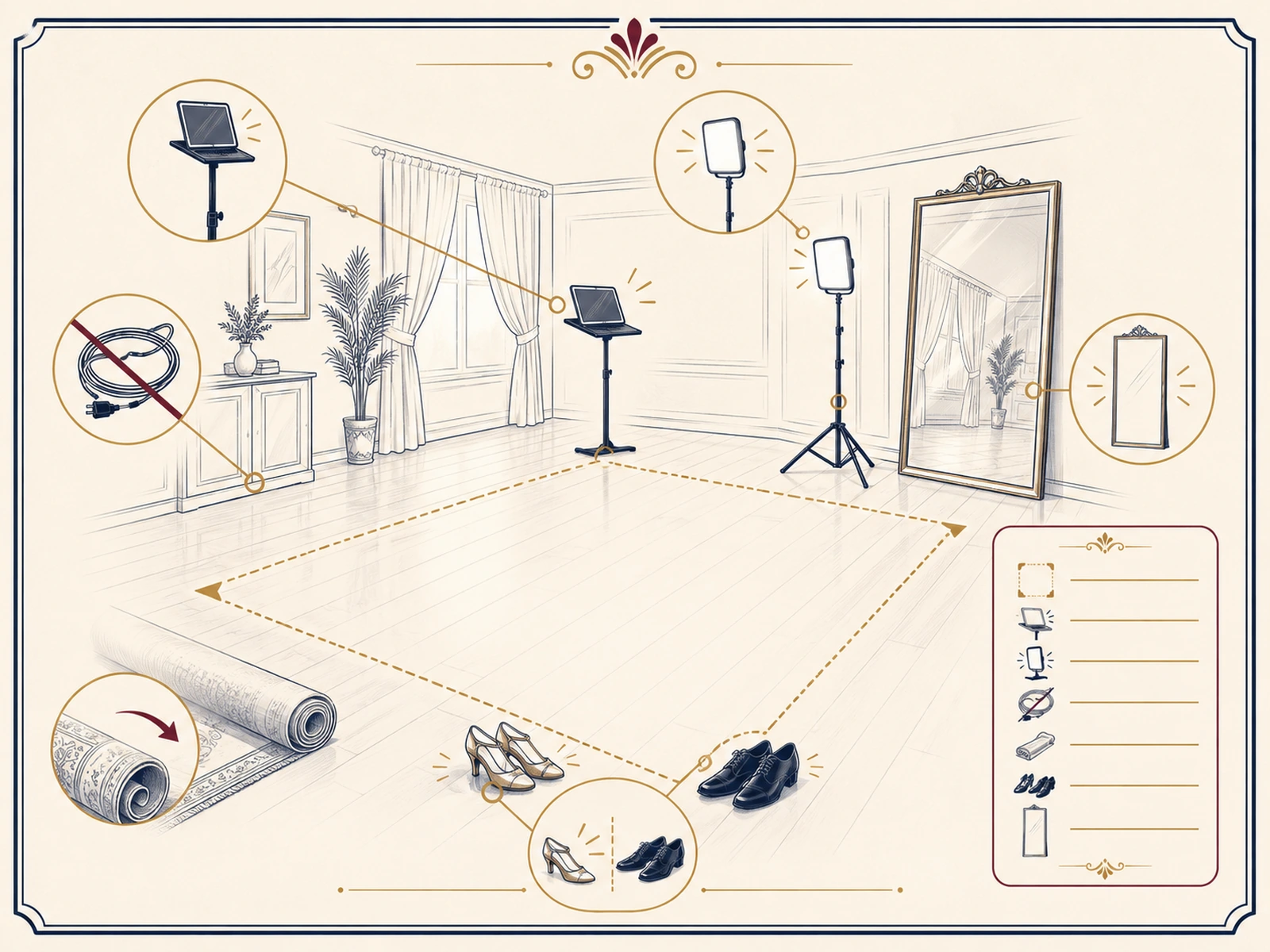
You do not need a ballroom to start. You do need a safe, uncluttered practice area.

Diagram of a safe home ballroom practice setup with cleared floor, device stand, lighting, and removed tripping hazards.

Space

Clear a small rectangle of floor. Remove rugs, cords, coffee tables, pet toys, and anything you could step on. For traveling dances like Waltz and Foxtrot, keep the steps compact at home and save big movement for a studio or larger room.

Floor

Avoid slippery socks on slick floors. Avoid sticky shoes that grip too much. If your floor is unsafe, practice timing, posture, and small foot placements instead of turns or traveling patterns.

Shoes

For your first online session, wear secure, comfortable shoes that stay on your feet. Do not practice in high heels, unstable shoes, or shoes that make you afraid to move. If you continue, read the Ballroom Dance Shoes for Beginners guide before buying dance shoes.

Device

Use the largest screen you have: laptop, tablet, or TV. A phone works for review, but small screens make footwork harder to see.

Lighting

Put the main light in front of you, not behind you. If your instructor can only see a silhouette, they cannot correct much.

Mirror

A mirror helps, but it is not required. If you use one, do not stare at it constantly. Practice a step, then check alignment, then return your attention to balance and timing.

Recording yourself

Short clips are useful. Record 20–30 seconds of practice, then watch for one thing only: timing, posture, or foot placement. Do not critique everything at once.

Partner or no partner

You can start alone. Practice your own timing, steps, posture, and direction. Add partner work later for frame, connection, and lead/follow.

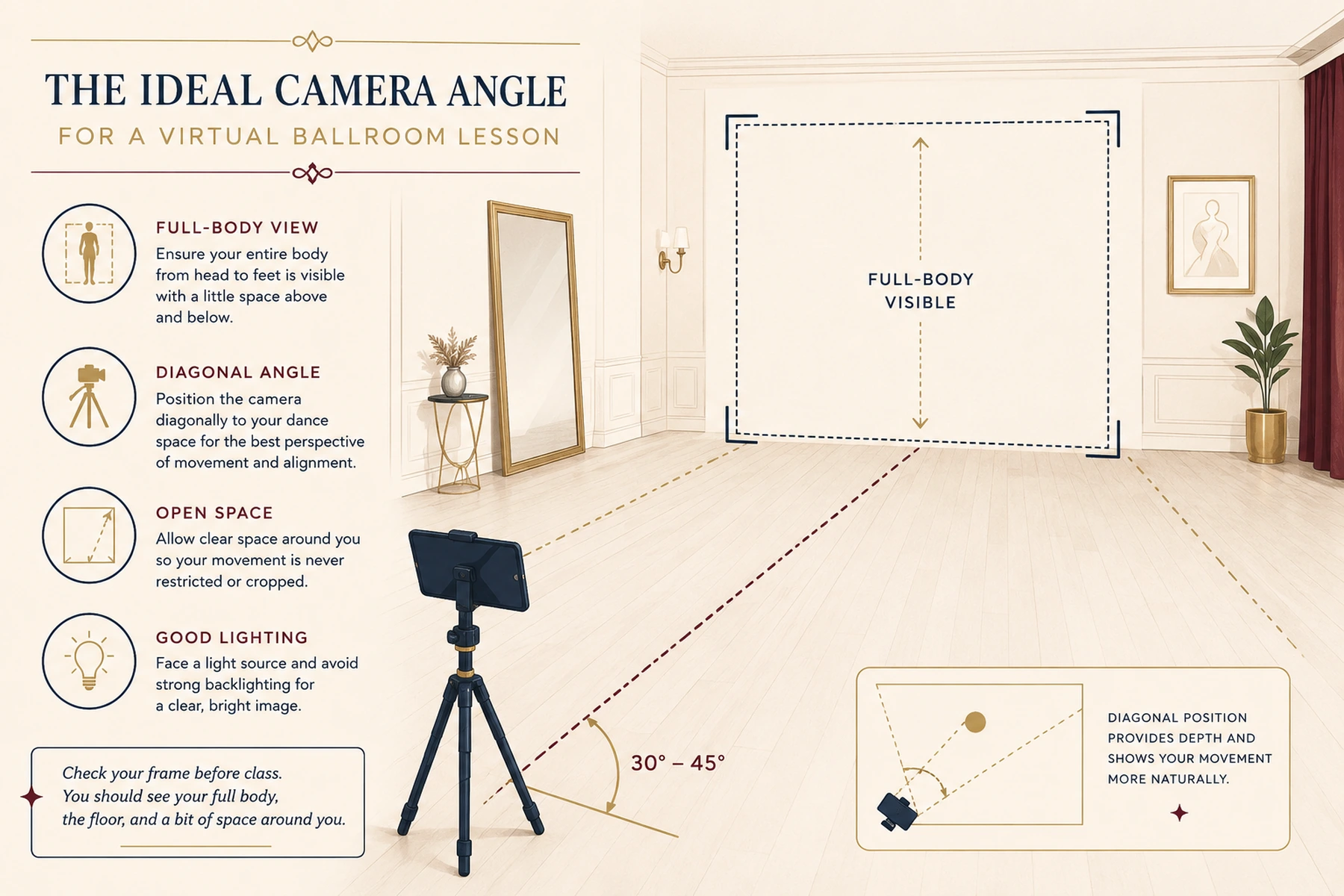
Camera angle for live lessons

Diagram showing camera placement for a virtual ballroom dance lesson so the instructor can see the dancer's full body.

For virtual private lessons, place the camera so your instructor can see your whole body from head to feet. A slight diagonal angle often shows both footwork and posture better than a straight front view. Test the view before the lesson starts.

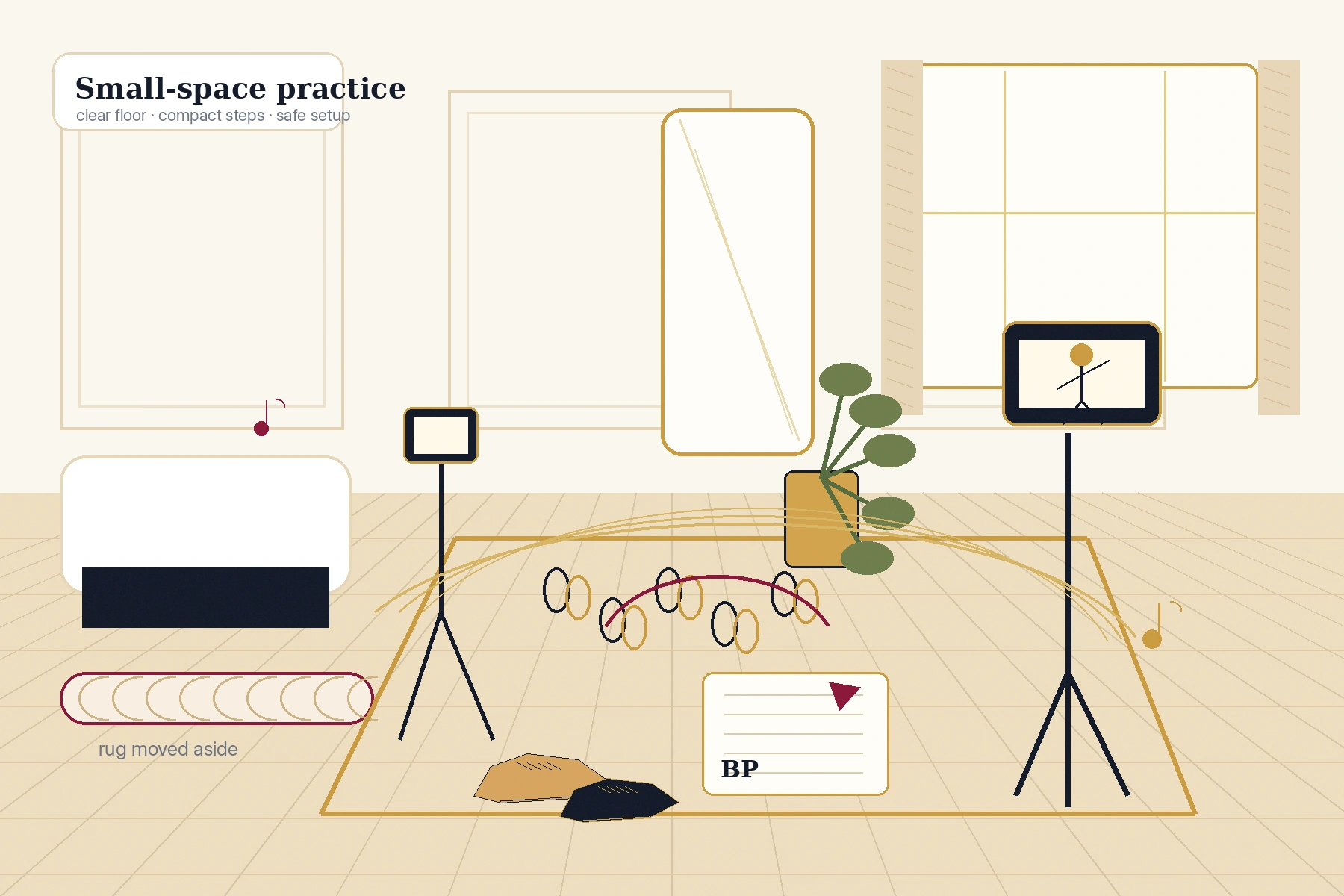
Practicing in a small space

Small apartment ballroom practice setup with compact steps and safe cleared space.
Keep steps compact and remove tripping hazards when space is tight.

Practice plan

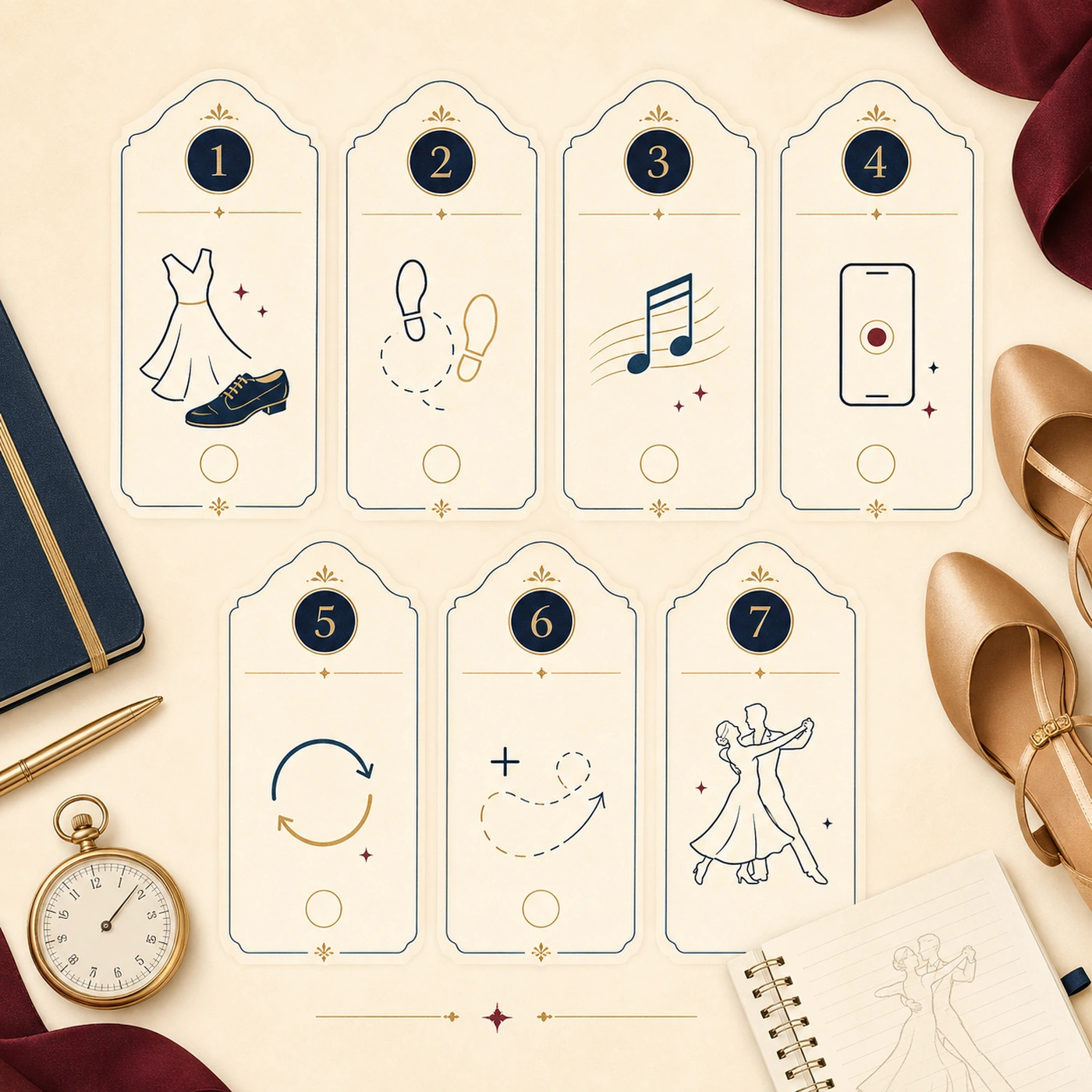
A simple 7-day online ballroom practice plan

Use this plan after choosing one beginner-friendly dance.

Seven-day beginner online ballroom practice plan with short daily practice steps.
  1. Day 1

    Choose one dance

    Pick Waltz, Rumba, Foxtrot, Cha Cha, East Coast Swing, or Salsa. Do not try to learn five dances in one week.

  2. Day 2

    Learn the basic step without music

    Watch the lesson once. Then stand up and practice slowly. Say the count out loud.

  3. Day 3

    Add music slowly

    Use a beginner playlist or a slow song that matches the dance. Your goal is not beauty yet. Your goal is to start on time and finish on time.

  4. Day 4

    Record 20 seconds

    Record a short clip. Watch only for one question: are your feet doing what the lesson says?

  5. Day 5

    Repeat the same lesson

    Do not chase a new video. Repeat the same step until it feels less surprising.

  6. Day 6

    Add one variation or turn

    Add only one new idea. If your timing falls apart, return to the basic.

  7. Day 7

    Practice like a real dance

    Put on music, do the basic, add the variation, return to the basic, and end cleanly. Write down what felt easy, what felt confusing, and what you want feedback on.

Print the 7-day practice plan

Roadmap

Your first 30 days

Week 1: Learn one basic step

Focus on comfort, timing, and repetition.

Week 2: Add one or two variations

Keep the movement small. Practice transitions back to the basic.

Week 3: Add music and simple floor direction

Practice with playlists. Learn to start, stop, and recover.

Week 4: Get feedback

Book a live virtual lesson, attend a group class, ask an instructor, or take an in-person lesson. Bring specific questions: Is my timing correct? Is my posture helping or hurting? Are we holding each other comfortably? What should I practice next?

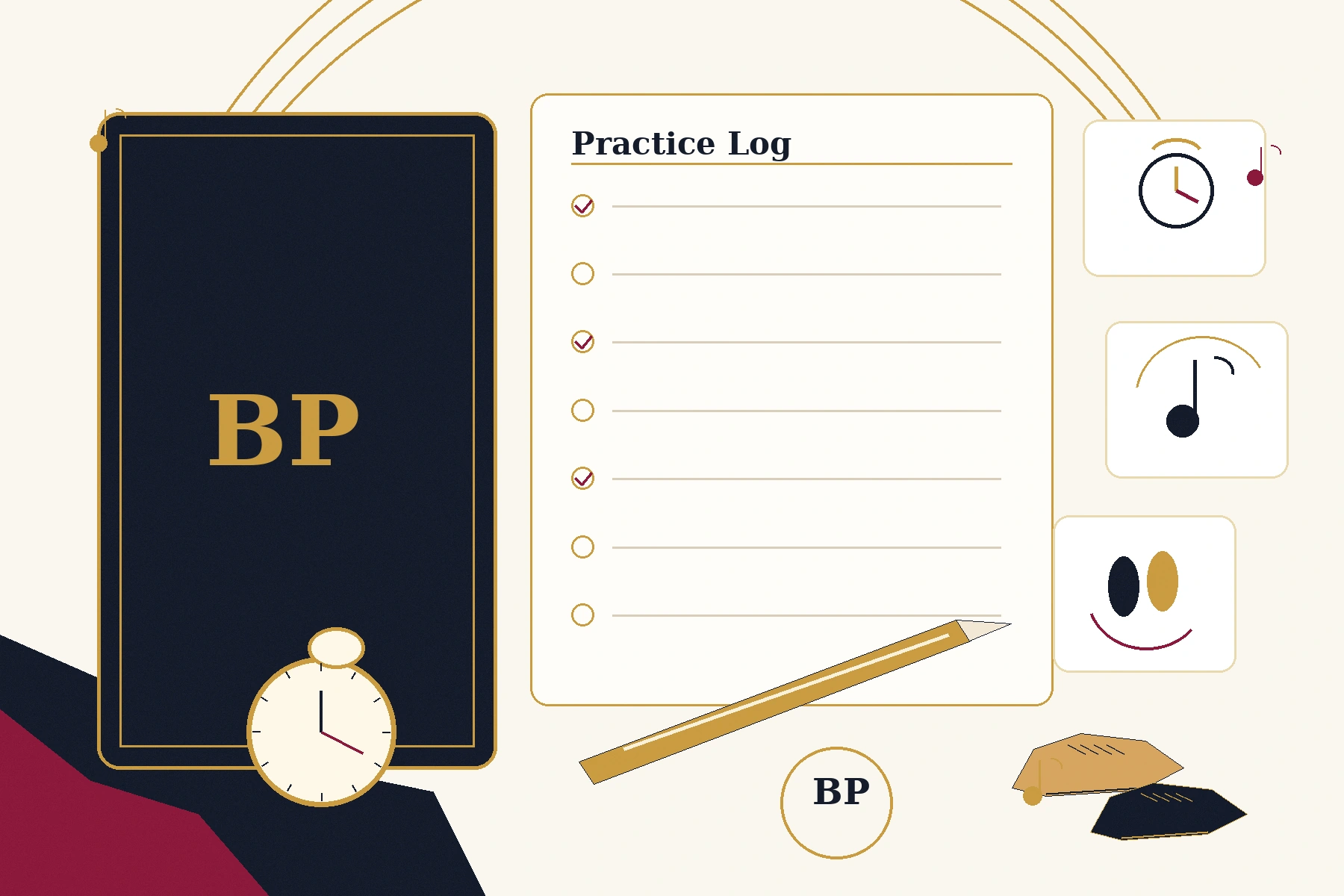
Notebook-style ballroom dance practice log for tracking online lesson practice.
Track what you practiced and what to ask about next.

Keep a record of each session so progress is visible and feedback questions stay specific. The free Ballroom Dance Practice Log is built for exactly this.

Practice with music

Practice between online lessons with Ballroom Pages playlists

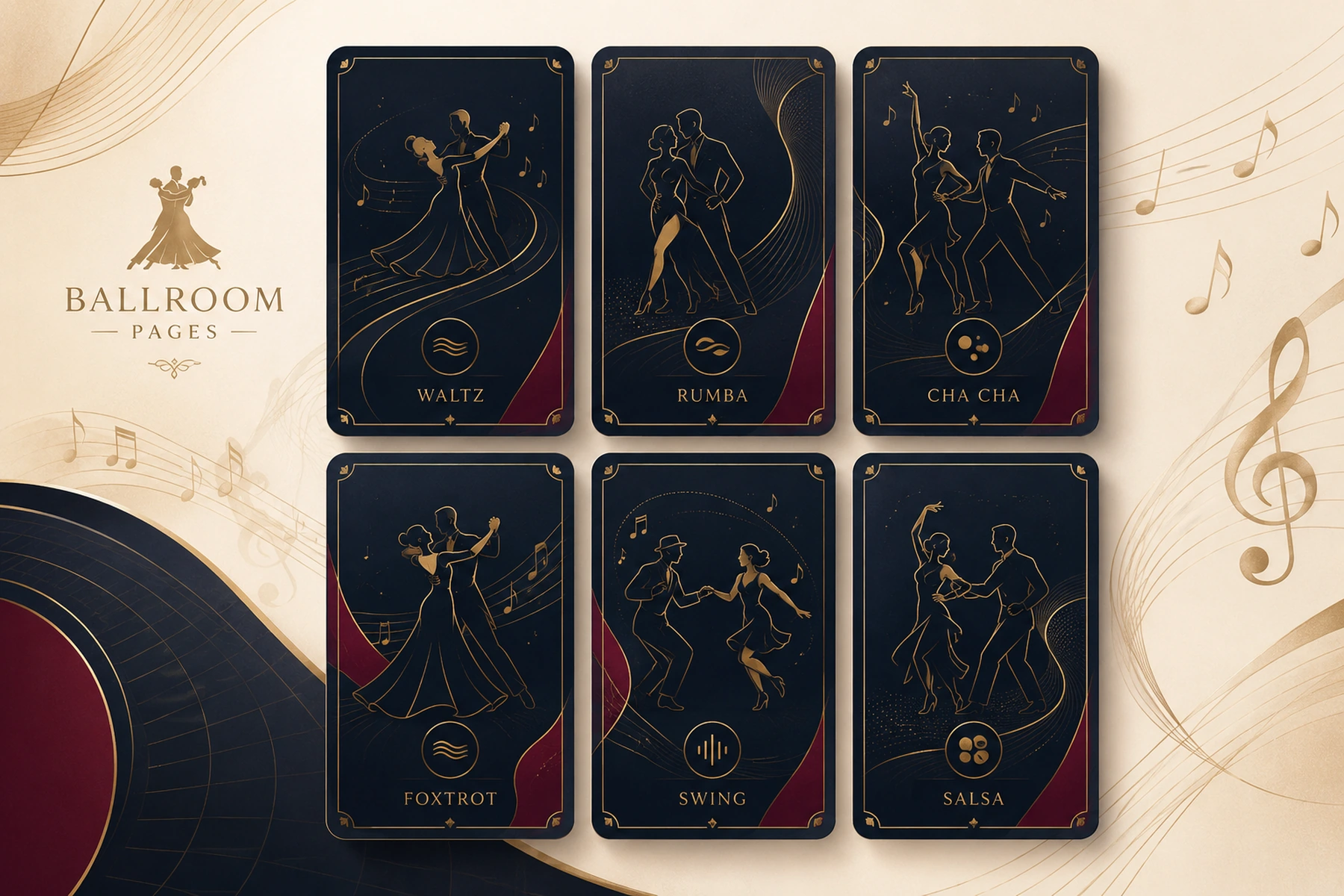
Online videos show you what to do. Music teaches you when to do it. Use Ballroom Pages playlists between lessons so you can practice timing for each dance.

Ballroom Pages playlist practice card for using dance music between online ballroom lessons.
  • Waltz: hearing 1-2-3 and moving smoothly
  • Rumba: slowing down and staying controlled
  • Cha Cha: finding the quick rhythm
  • Foxtrot: feeling slow/quick timing
  • Swing: keeping bounce and energy organized
  • Salsa: staying grounded in the beat
  • Wedding dance: testing whether your song fits Waltz, Rumba, Foxtrot, Swing, Salsa, or another style

Playlists support practice, timing, and confidence. They do not replace instruction, feedback, or correction.

Explore Ballroom Pages playlists Learn how to count ballroom music

Before you buy

Questions to ask before paying for online lessons

  1. What dance styles are included?
  2. Is there a beginner sequence, or just a video library?
  3. Can I learn without a partner?
  4. If I have a partner, are both leader and follower roles shown clearly?
  5. Are timing and music explained?
  6. Are there practice assignments?
  7. Can I ask questions or get feedback?
  8. Are lessons live, prerecorded, or both?
  9. Can I access replays?
  10. What device does it work on?
  11. Does it work in a small room?
  12. Is the instructor’s background visible?
  13. What is the current price?
  14. Does it renew automatically?
  15. How do I cancel?
  16. Is there a refund policy?
  17. Are wedding routines custom or pre-made?
  18. Are risky moves, dips, or lifts included?
  19. Is there a realistic timeline for my goal?
  20. What should I practice between lessons?

Avoid these

Red flags and common mistakes

Red flag: “You’ll master ballroom fast”

Beginners can make visible progress quickly, but ballroom is a body skill. It needs repetition and feedback.

Red flag: no clear beginner path

A huge video library is not automatically beginner-friendly. Look for “start here,” “lesson 1,” “practice this,” and “next step.”

Red flag: hidden pricing or unclear cancellation

If you cannot find the renewal terms, cancellation process, or refund policy, pause before buying.

Red flag: choreography that is too hard for the timeline

Wedding couples often need simpler material than they imagine. A clean, comfortable first dance is better than a stressful routine that collapses under pressure.

Mistake: watching without standing up

You do not learn ballroom by watching alone. Stand up, count out loud, and practice.

Mistake: changing videos every day

Repeat the same beginner lesson until your body remembers it.

Mistake: ignoring music

A step without timing is not a dance yet.

Mistake: practicing through pain

Stop if you feel pain, dizziness, chest discomfort, or unusual shortness of breath. Seek appropriate medical advice for health concerns.

How we compare

Our comparison methodology

We do not rank online ballroom lessons by popularity, price, or affiliate commission. We evaluate online lesson options by:

  • Beginner friendliness
  • Dance coverage
  • Structure and progression
  • Instructor quality or credentials where verifiable
  • Feedback options
  • Partner/no-partner usefulness
  • Wedding couple usefulness
  • Music and timing support
  • Practice assignments
  • Video clarity
  • Price transparency
  • Cancellation and refund clarity
  • Mobile and home-practice usability
  • Safety and realism
  • Whether the platform helps people practice, not just watch

For this page, provider examples are used to show the range of current formats. They are not endorsements, rankings, or paid placements.

Editorial and affiliate note

This guide is written as an editorial resource. At launch, it should not contain affiliate links. If Ballroom Pages later adds partner or affiliate links, the page should keep the comparison methodology visible, add a clear disclosure before the first affiliate link, and avoid ranking any provider higher because of compensation. See our affiliate disclosure and editorial policy.

Pick your path

Best next steps by learner type

Social dancer

Choose Salsa, Swing, Rumba, Foxtrot, or Bachata depending on where you want to dance socially. Use playlists between lessons, and read up on dance etiquette.

Returning student

Use online lessons for review and vocabulary, then schedule feedback for frame, connection, and technique.

Competition-curious dancer

Use online technique lessons for study, but get qualified coaching before building habits you will need to undo.

FAQ

Online ballroom dance lessons FAQ

  • Can you really learn ballroom dance online?

    Yes, you can learn basic steps, timing, vocabulary, simple combinations, and practice habits online. You will still benefit from feedback for frame, connection, posture, balance, and partner technique.

  • What is the best type of online ballroom lesson for beginners?

    Most beginners do best with a structured course library or a beginner-focused private virtual lesson. Free videos are useful for exploring, but they can feel scattered without a sequence.

  • Do I need a partner?

    No. You can start with solo timing, footwork, posture, and basic patterns. A partner becomes more important when you work on lead/follow, frame, and social confidence.

  • Are online wedding dance lessons enough?

    They can be enough for a simple first dance if you choose beginner-friendly material, start early, and practice consistently. If you want custom choreography, dips, lifts, or strong partner technique, get live or in-person feedback.

  • How much space do I need?

    You can practice many beginner drills in a small open area. Keep steps compact, remove tripping hazards, and avoid traveling patterns if your space is limited.

  • Are free online lessons enough?

    Free lessons can help you start. They are less reliable as a full learning plan unless you organize them into a sequence and practice consistently.

  • How often should I practice?

    Start with 10–20 minutes, three to five times per week. Short, repeated practice usually beats occasional long sessions.

  • What dance should I learn first?

    For many beginners, Waltz, Rumba, Foxtrot, Cha Cha, East Coast Swing, Salsa, or Bachata can be good first choices. The best choice depends on your music, goal, and whether you are learning for social dancing, a wedding, or general confidence.

  • Should I choose live virtual lessons or prerecorded lessons?

    Choose prerecorded lessons if you want flexibility and repetition. Choose live virtual lessons if you want feedback, accountability, and corrections.

  • Can online lessons replace in-person lessons?

    Not completely for every learner. Online lessons can be excellent for starting and reviewing, but in-person coaching is often better for partner connection, posture, frame, balance, and advanced technique.

  • What should I wear?

    Wear comfortable clothes that let you move. Choose secure shoes that stay on your feet. Avoid slippery socks, unstable heels, and shoes that grip the floor too much.

  • How do playlists help?

    Playlists help you practice timing with real music instead of only copying a lesson video. Use them to repeat basics, hear the beat, and build confidence between lessons.

Sources & research notes

Sources and research notes

Provider details and prices were checked as a research snapshot on May 22, 2026. Verify current details before publishing or linking externally. Citations and source links should be added for platform-specific claims, along with a medical/exercise safety source for the general “consult a professional” safety language. Do not publish unverified prices.

Updated May 22, 2026. Questions or corrections? Contact us.