
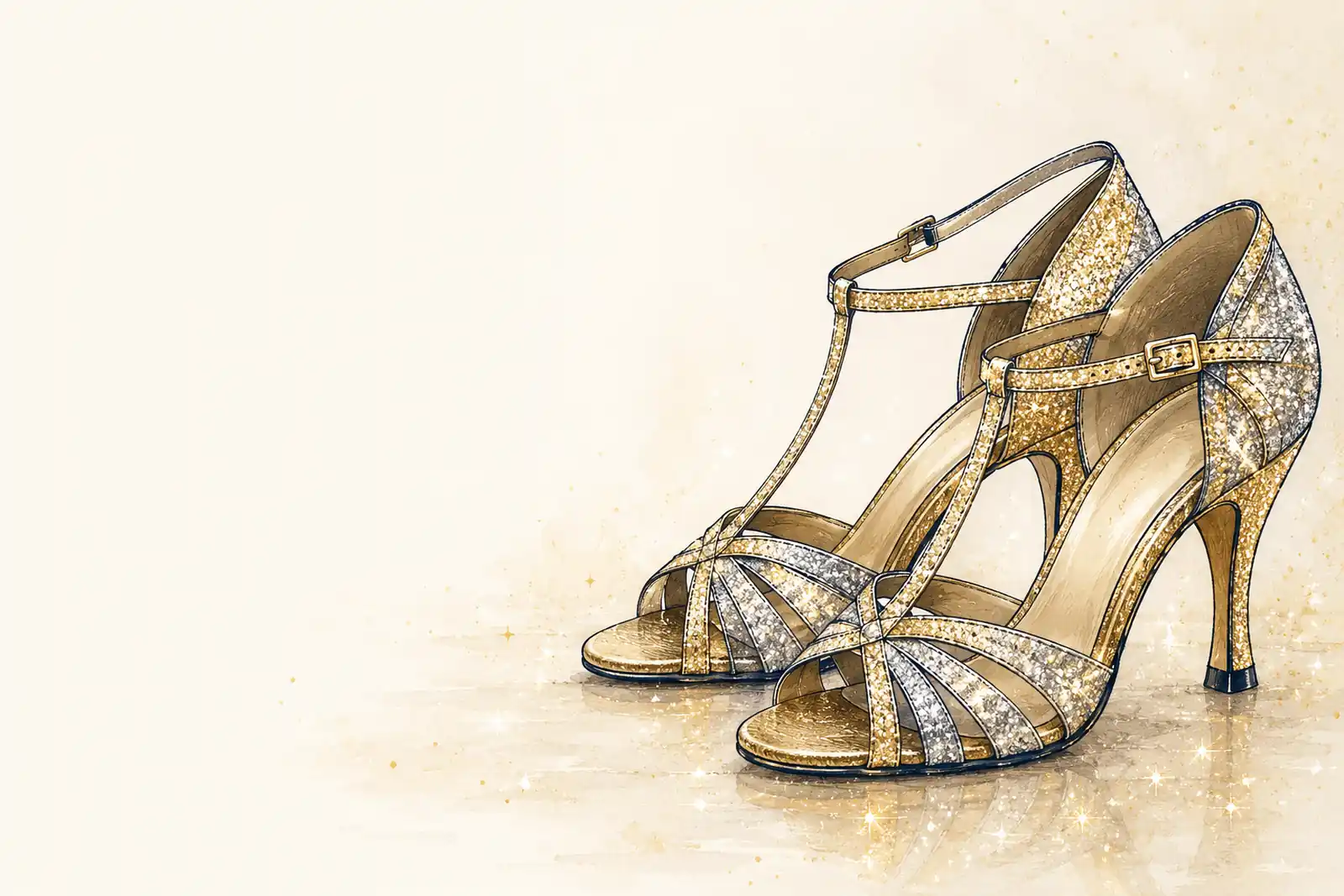
What are glitter sole heels and glitter soles?
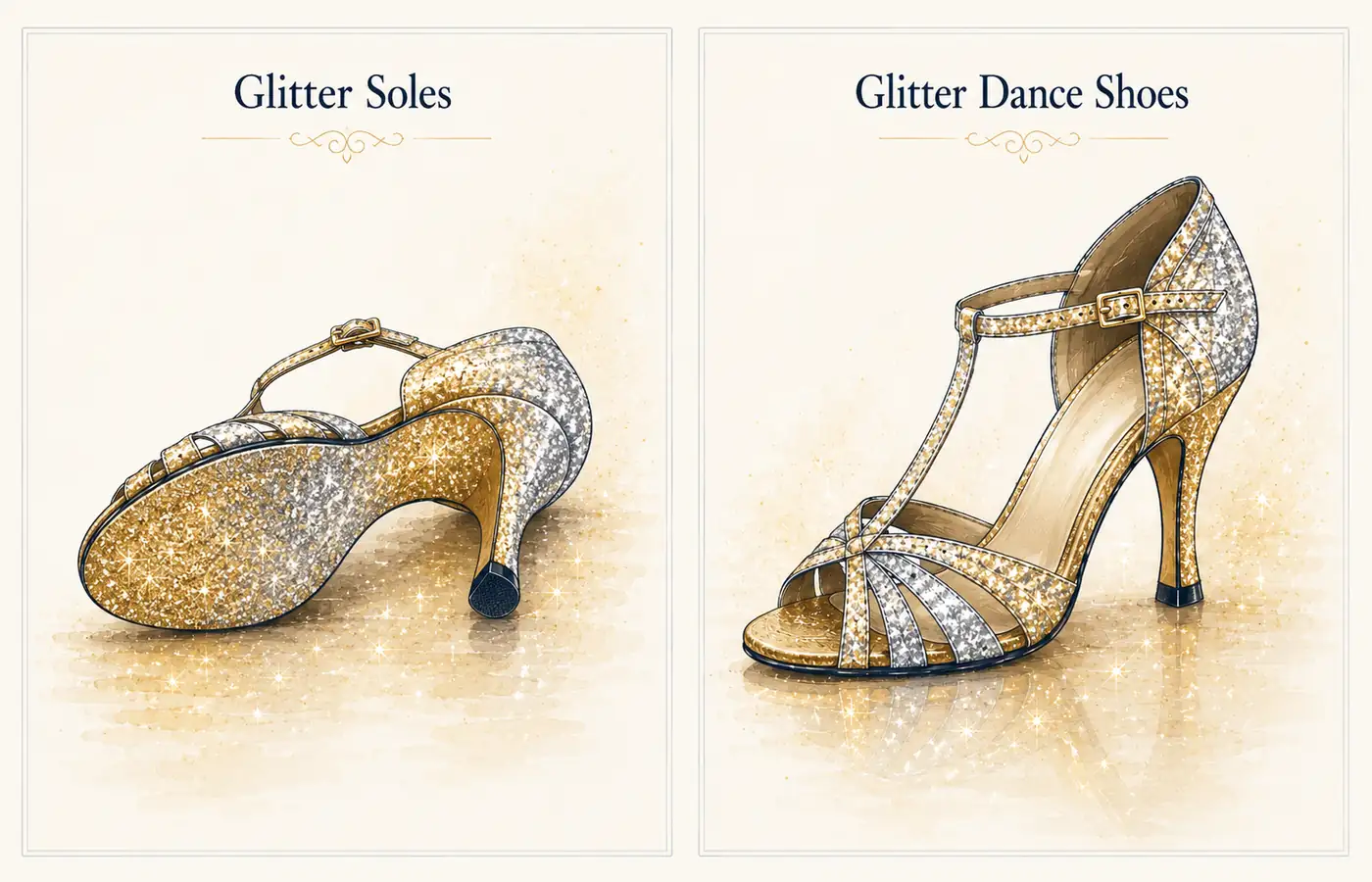
The phrases get used loosely, so it helps to separate them. Glitter sole heels (often searched as “glitter bottom heels”) usually means dance heels that sparkle—shoes finished in glitter fabric, sequins, or rhinestones so they catch the light as you move. Glitter soles are a more specific product: a thin, decorative sole material, sold in colours like gold, silver, and black, that is glued onto the bottom of a dance shoe to make the underside shimmer when the foot lifts and points.
Both live in the same world—the sparkly, expressive end of dance footwear—and both are layered onto a shoe that still has to do its job. Underneath the shimmer, a glitter dance shoe is still a dance shoe: it needs a secure fit, a stable heel, and a sole that lets you turn. Think of the glitter as the finish on a working tool, not the tool itself.
Shopping for sparkle?
Download the Glitter Dance Shoe Buying Checklist before you order. It covers fit, heel height, sole type, glitter-sole care, floor testing, and competition rules—so the sparkle never gets in the way of the dancing.
Download the checklistGlitter soles vs glitter dance shoes
Deciding which one you actually want saves money and disappointment. Here is how the two compare:
| Glitter soles (the material) | Glitter dance shoes (the shoe) | |
|---|---|---|
| What it is | A decorative sole glued to the bottom of a shoe | A dance shoe with glitter, sequin, or rhinestone uppers |
| Where the sparkle shows | The underside of the shoe, seen as the foot lifts | The top of the shoe, seen the whole time |
| Colours | Typically gold, silver, or black glitter | Silver, gold, black, and many finishes |
| Added to | Shoes you already own or a new pair | Bought complete |
| Best for | Showdance, performance, competition flair | Latin, Rhythm, salsa, social, and stage looks |
| Watch out for | Grip changes vs suede; indoor-only; application | Comfort and stability under the sparkle |
If you mainly want your shoes to sparkle from above while you dance, you want glitter dance shoes. If you want the flash under your foot during showdance lines and lifts, you want glitter soles. Some dancers use both.
How to choose glitter dance shoes
Sparkly shoes are still dance shoes, so choose them the same careful way—then let the finish be the tiebreaker.
Sole
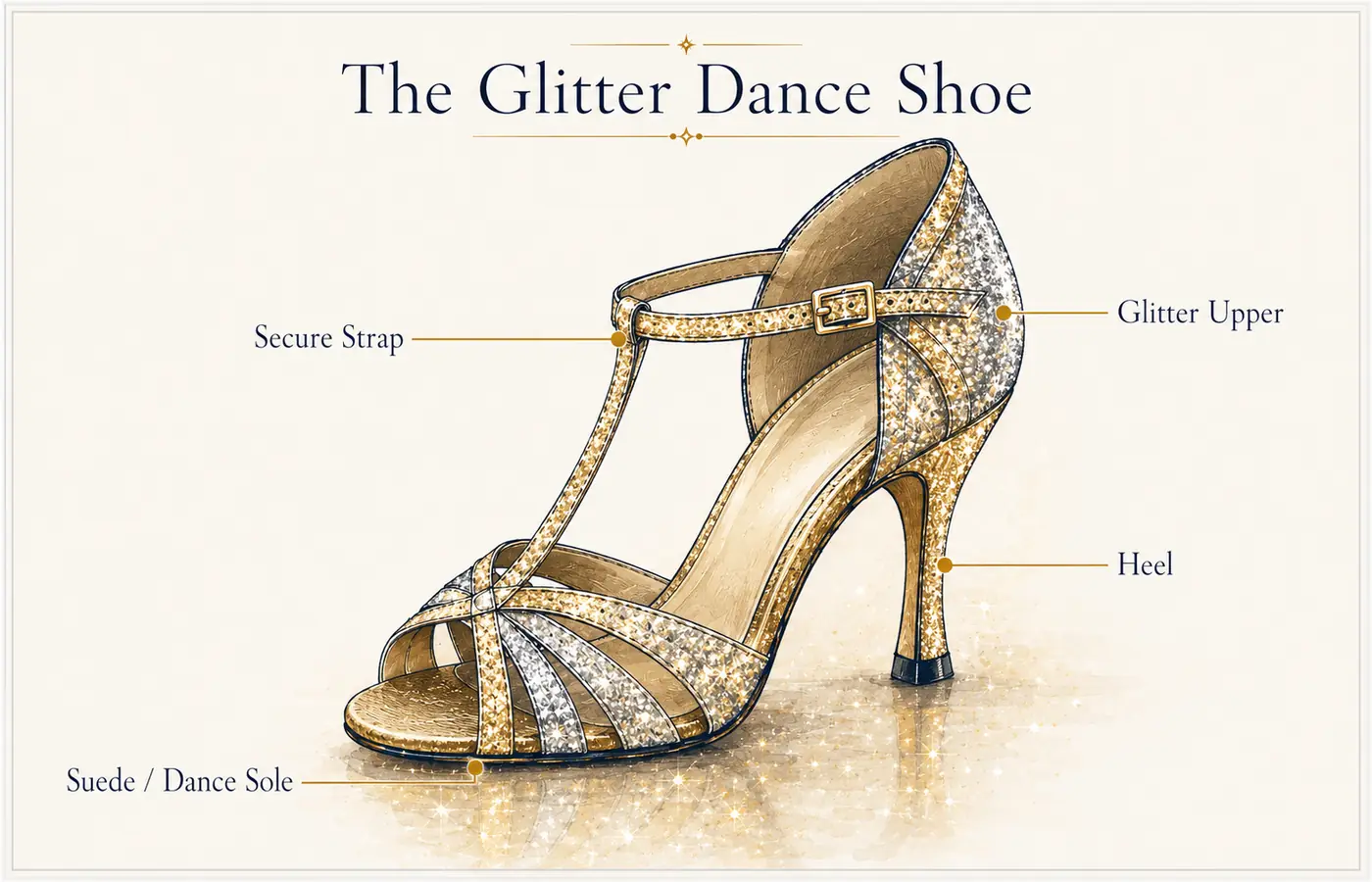
Most glitter dance shoes still use a suede sole for indoor glide and grip. Suede gives the balance of slide and control that makes turns feel manageable. A glitter upper does not change how the sole works; a glitter sole does, which is covered below.
Heel height and stability
Glitter follower shoes often come in higher, slimmer heels. If you are newer to dancing in heels, a lower or flared heel is steadier. Pick a heel you can turn and change weight on without tensing—sparkle does not make a tall heel easier.
Fit and security
The shoe should feel snug and stay on through turns and side steps. Straps and buckles should hold without digging in. A gorgeous shoe that slips at the heel is the wrong shoe. For the full fit routine, see the dance shoe sizing guide.
Where you will dance
Match the shoe to your dancing. Sparkly open-toe follower shoes suit Rumba, Cha Cha, salsa, and social Latin; a closed, elegant shoe suits the Smooth and Standard dances. Start from function, then choose your finish.
Adding glitter soles to your shoes
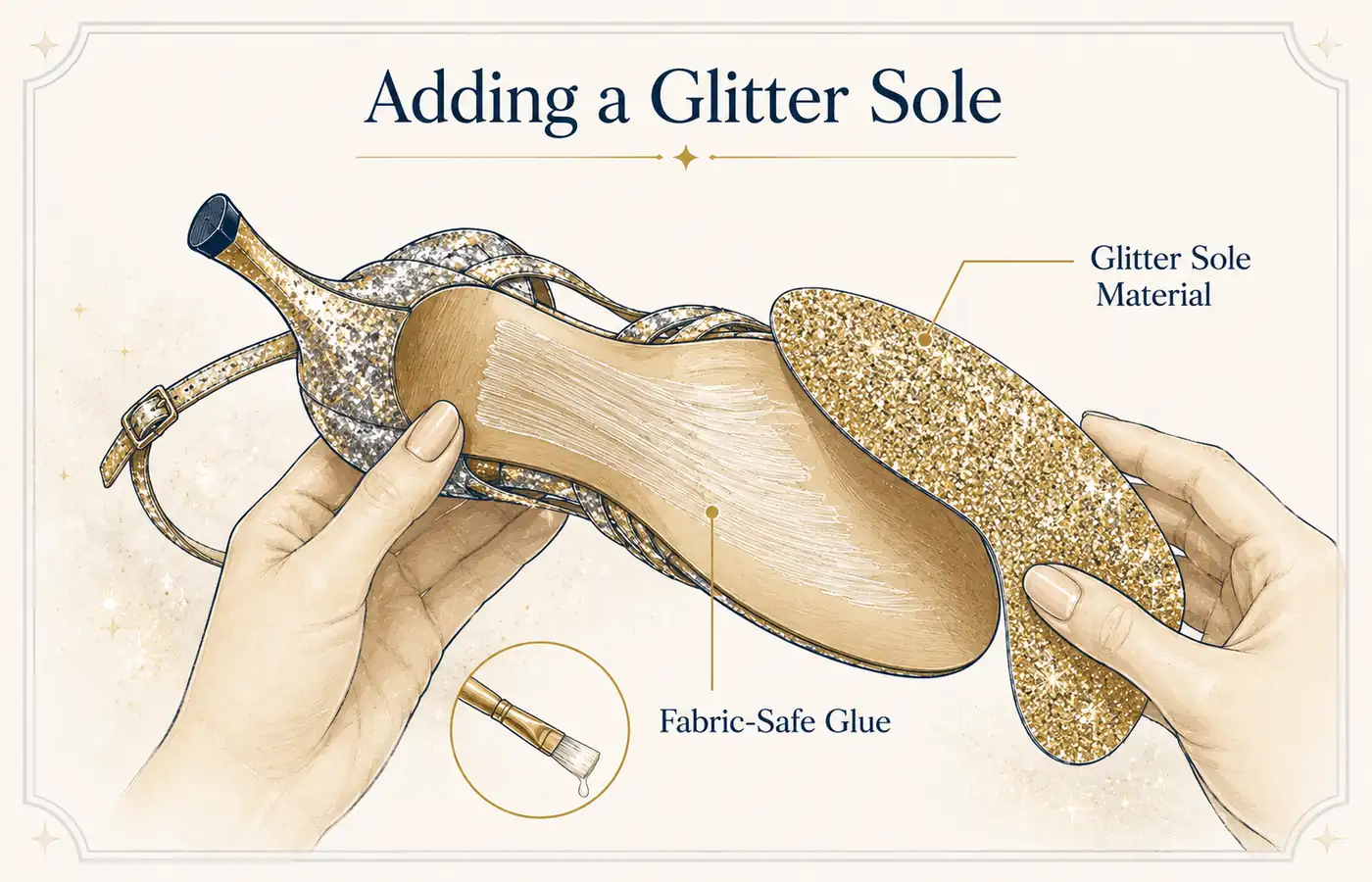
Glitter soles are the more specialised product. They are a thin decorative sole material you attach over (or in place of) the shoe’s existing sole, so the bottom of the shoe sparkles when your foot lifts, points, or finishes a line.
How they are ordered and fitted
Glitter soles are typically ordered to match your shoe size and heel height, then glued on with a strong fabric-safe adhesive. Many dancers have this done by a shoe repairer or the retailer rather than at home, because a clean, secure bond matters—a lifting sole is a hazard on the floor.
Safety and rules note: A glitter sole can be more slippery or less predictable than suede on some floors, so test it thoroughly before performing. Some competitions and organizations have rules about soles and shoe modifications—check your event’s regulations before adding glitter soles to competition shoes.
Where dancers wear glitter shoes
Sparkle has a natural home. Use this to decide whether glitter is right for the dancing you do:
A natural fit
- Latin and Rhythm dances (Rumba, Cha Cha, Jive, Samba)
- Salsa, bachata, and social Latin nights
- Showdance and cabaret performances
- Competition and exhibition costuming
- Follower styling that wants to catch the light
Usually more understated
- Smooth and Standard dances (elegant, closed shoes)
- Very first lessons, where comfort comes first
- Studios with strict floor or shoe rules
- Long practice sessions (save the sparkle for the floor)
- Anywhere the shoe has to double as street footwear
None of this is a hard rule—dancers wear what they love. But matching the finish to the setting keeps the shoe practical as well as pretty. If you are still choosing your dances, the best ballroom dances for beginners can help.
How to care for glitter shoes and soles
Sparkle lasts longer with a little care, and the care rules are close to normal suede-sole rules.
- Keep glitter-soled shoes indoors—outdoor surfaces damage the sole and dull the sparkle, just like suede.
- Use a shoe bag so the soles and sparkle stay clean between dances.
- Air shoes out after dancing to protect the uppers and adhesive.
- Wipe glitter uppers gently; avoid soaking sequins or rhinestones.
- Check a glitter sole regularly for lifting edges and re-bond it before it becomes a hazard.
- Avoid household cleaners on the sole unless the maker says they are safe.
- Replace heel tips, straps, or a worn glitter sole when they stop feeling secure.
If a shoe suddenly feels too slippery or too sticky, stop and check the sole—dirt, moisture, wear, or a floor mismatch is usually the cause.
Common mistakes to avoid
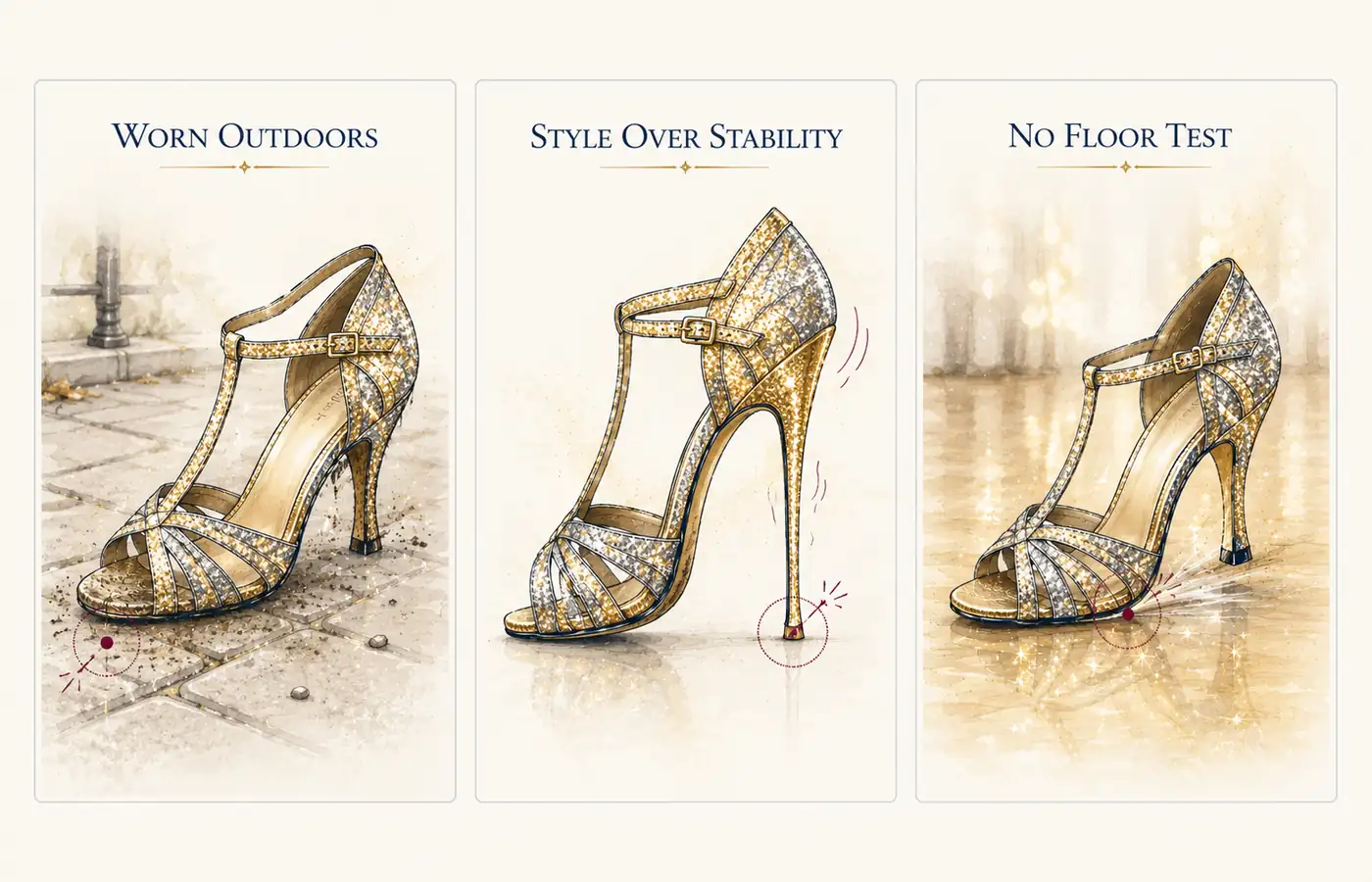
Choosing sparkle over stability
A shoe that dazzles but makes you nervous to turn is the wrong shoe. Fit and a stable heel come first; the finish is the tiebreaker.
Wearing glitter soles outdoors
Like suede, glitter soles are for indoor dance floors. Outdoor use damages the sole and changes the grip.
Skipping the floor test
A glitter sole can grip or slide differently from suede. Always test it on your actual floor before a performance.
Ignoring competition and studio rules
Some events restrict sole modifications, and some studios have floor rules. Check before you commit to glitter soles.
Home-gluing a sole loosely
A lifting sole is a trip hazard. If you are not confident in a clean, strong bond, have a repairer or retailer fit it.
Buying the wrong product
Decide first whether you want sparkly uppers or a sparkly sole—they solve different looks and cost different amounts.
Glitter dance shoe buying checklist
Run through this before you order glitter shoes or glitter soles. If it all checks out, you have a pair that sparkles and works.
- The shoe fits snugly and stays on through turns.
- The heel feels stable at a height you can dance on.
- You know whether you want glitter uppers, a glitter sole, or both.
- The sole suits indoor dance floors.
- A glitter sole is bonded cleanly, with no lifting edges.
- You have tested the grip on your own floor.
- The look matches the dances and settings you dance in.
- Any competition or studio sole rules are respected.
- The return policy is clear before you buy.
- Performance shoes were tested before the event, not on the night.